Will More Women in Congress Mean More Bipartisanship?

By Joan Johnson-Freese & Alexandra Nicole Islas

The answer to this question is: not likely. The 118th Congress, extending from January 3, 2023 – January 3, 2025 includes 149 women (107D, 42R), two more than the previous record of 147, set in 2022, thereby constituting 27.9% of Congressional seats. However, beyond hyper-partisanship, differing views among Congresswomen regarding the meaning of “agency” is a neglected factor in the larger debate about women legislators and bipartisanship. Women have stepped forward in a bipartisan fashion on issues where there is no logical counterargument, such as the military needing to provide body armor appropriate to women soldier’s physiques or the need to keep the government open. But differing views on agency can be divisive. Understanding what agency is, differing views of how it is obtained and suppressed, as well as how agency affects gender relations and even violence provides a more granular view of what might be expected from the growing number of women legislators.

In 2013, a U.S. government shutdown seemed inevitable until a bipartisan group of 20 women senators saved the day. Time magazine heralded them as “the only adults left in Washington” for their willingness to reach across the aisle and find a compromise that avoided a costly shutdown. In that article Senator John McCain said, “Imagine what they could do if there were 50 of them,” inferring that women lawmakers would act more cooperatively than their male counterparts.

Research indicates that men and women tend to act differently regarding how they approach conflict resolution. Of the five types of conflict resolution approaches—competing, avoidance, accommodating, compromise and collaboration—men favor the first two, and women the last three. But women are not always and inherently peacemakers. The 2013 example of bipartisanship may have been a one-off because the Senators saw it in everyone’s interest to keep the U.S. government open as both parties get blamed when the government shuts down.

The Importance of Personal Agency

Agency is an often overlooked and little understood concept of significant importance. Social science researchers have found that personal agency, simply stated as the ability to take meaningful action in your own interest, correlates with feelings of happiness and life satisfaction because it allows individuals to feel in control of their own lives. For example, a 2011 study found that conservatives were happier than liberals, in part because of their strong sense of personal agency. Recently, however, conservative—typically Republicans—have been described and describe themselves as angry, some even supportive of political violence, with many feeling a loss of agency (e.g. control over their personal circumstances) they once felt. A recent Secret Service report on mass violence in the U.S. cites men facing “major life stressors” as a key component in the dramatic rise in mass violence.

Feelings of loss of control among white, often poor, American men have given rise to the Great Replacement Theory, a racist, sexist, anti-immigration theory that blames negative circumstances on others and pushes authoritarian responses to address their woes. Men who believe this theory feel angry at women, believing they are among those “stealing their jobs” and robbing them of their masculinity, and control. Given the traditional dominance of men, including in writing and interpreting laws, they have been allowed to suppress women’s agency. Now, the shifting sands of who is gaining and losing personal agency has affected both men and women.

Agency can be suppressed through personal experience as well. In environments where “the system” isn’t trusted, and where women have seen others report harassment or assault and nothing was done or the woman suffered backlash, women who should have agency based on legal principles nevertheless often do not exercise it. In the United States, an estimated one in three women experience sexual assault in their lifetime, but only 28% of sexual assault victims report their assault to the police. In the workplace specifically, the well-publicized U.S. example of sexual harassment at Fox News by CEO Roger Ailes was exposed only after years of fear-based toleration.

Agency Among Women Lawmakers

Regarding shaping and voting on legislation, important differences exist among women regarding how one “gets” and maintains agency.  Generally, liberal women support policies and laws advancing women’s rights and thereby seek to grant agency to women as a group. Conservative women, however, tend to support traditionally held conservative tenets of gender blindness, limited government, individualism and traditionalism, thereby making agency an individual issue and placing emphasis on personal tenacity and self-reliance. Conservatives believe that most people get ahead if they work hard. Conservative women often associate feminism with “victimization” and adamantly reject any such association, focusing instead on positive personal achievement. Rather than #MeToo, “moving on” is the mantra of conservative women, as a superior vision of female empowerment.

These differing views on agency shapes legislation. Liberals, for example, see reproductive health as a group issue and support legislation to require employers and insurance companies to cover contraception costs as part of health care. Conservatives, on the other hand, including conservative women, will more likely see cost coverage as a personal responsibility and vote against government intervention requiring employers or insurance carriers to provide such.

Regarding women in the workforce, views on agency can also intercede, evidenced in a 2020 fight in California over “gig work” at places like Uber and Lyft. All of the 21 women that voted yes on the bill were Democrat, while both of the two women that voted no were Republican. Whereas liberal women there supported efforts to mandate that gig work  pay benefits that help women as a group long-term, conservative women argued against such efforts as hindering individual women’s near-term opportunities to earn (flexible gig work often being attractive to women) if businesses pay workers less due to having to pay benefits.

Another aspect of workforce disagreement is found regarding the gender pay gap. Many Republican women see the gap as attributable to choices women freely make about professions and jobs that result in lower pay, part of what is frequently referred to as choice feminism. When the House voted on the Paycheck Fairness Act in December 2022 not one Republican woman voted in favor, arguing the bill would spur more litigation against employers and therefore hurt women in the workforce. The bill required employers to prove why pay disparities between sexes existed, banned employers from asking employees about their salary history and built in avenues for employee recourse if they thought they were being paid unfairly.  Republican Representative Elise Stefanik offered an alternative bill, the Wage Equity Act, that would encourage but not require employers to conduct voluntary pay analyses and protect workers who discuss their pay with colleagues, but under employer-set parameters.

Marginal Bipartisanship

Following a “Golden Age” of bipartisanship between 1969-79, U.S. Congressional bipartisanship has dropped significantly overall. The Lugar Center – McCourt School Bipartisan Index provides scores and rankings for Members of Congress that measure bill sponsorship and co-sponsorship data based on the degree to which members of opposite parties agree on the same issue with their votes. Looking at the data from 2021, of the 435 Members of Congress total, 24% had a positive bipartisan score, with women making up only 26% within that number. Women operating in a still male-dominated environment often feel especially bound to uphold the positions of their designated political party, thereby suppressing their agency as legislators.

Navigating voter and partisan constraints on agency has been an issue for women in both political parties.  Republican women lawmakers and 2022 candidates, for example, found reproductive rights a difficult minefield to navigate after the Republican-supported 2022 Supreme Court reversal of Roe v Wade and the subsequent landslide win for reproductive rights in Kansas. On the Democratic side, progressive women have found themselves at odds with their more conservative party leadership, which is largely motivated by a drive for party consensus, thus inhibiting their agency. Further, women frequently have less power than men to combat the backlash that is commonly present when straying across party lines, especially on highly polarized issues; witness Liz Cheney’s fall from grace in the Republican party.

But all is not lost. There are a number of issues of concern to all women ripe for addressing through legislation. A recent study found women politicians are more than three times as likely to be targeted by harassment or threats than their male counterparts. The anger and violence among white men spurred by their feelings of lost agency has been a trigger for women being targeted. With their numbers growing, Republican women politicians are finding themselves targets of misogynist colleagues and pundits much as Democratic women politicians long have experienced, giving both a vested interest in addressing the doxxing, trolling, sexual deepfakes, harassment, and violence that all women politicians suffer.

Mid-term elections evidenced many voters stepping away from extremism, which perhaps will open the door for cooperation or compromise among more women on more issues. And, as the number of women legislators increase, the pressures for them to conform to the masculine competitive ethos of their still-dominant male counterparts will wane. When that happens, the full extent of Senator McCain’s 2013 statement will be put to the test.  Sometimes, reframing issues away from ones of contention like correcting the gender wage gap towards those likely to get more women into non-traditional workforces, which both parties support, provides space for bipartisanship. A willingness to consider reframing issues to ones where cooperation can occur might prove the bipartisan difference women can make.

The opinions expressed here are solely the authors’ and do not necessarily reflect the opinions and beliefs of Women In International Security or its affiliates

Authors

Joan Johnson-Freese is a Senior Fellow with Women in International Security and the author of multiple books and articles on women and politics, her latest is Women vs Women, The Case for Cooperation (2022). https://joanjohnsonfreese.carrd.co/

Alexandra Nicole Islas is pursuing a degree in the field of International Relations at Harvard Extension School, and is a Research Assistant for Dr. Joan Johnson-Freese on issues related to Women, Peace & Security. She is also an accomplished dancer, writer, and human rights advocate focusing on increased security through the development of arts and education programs internationally. https://scholar.harvard.edu/alexandranicoleislas
By Liliya Khasanova

The protests in Iran in the name of Mahsa Amini are one of many examples of how the advancement of technology enables us to speak up, spread the word, and learn about human rights violations. Online anonymity and, therefore, reduced accountability for gender-based violence affects the vulnerability of individuals. There is no doubt now that the internet has become the most consequential communication technology of the human rights era.

Despite the technical universalism that technology grants us, there is a strong pushback on conceptual universalism in human rights in cyberspace, including gender issues. In multilateral settings, the efforts of states to regulate malicious state operations have been underpinned by cybersecurity concerns, with little attention paid to human rights protection. The gender dimension, if at all represented, is mainly in the norms of capacity-building and gender parity, avoiding direct referrals to gender equality and women’s rights.

Multilateral Forums under UN Auspices

Until 2021, two main forums had a mandate to discuss norms and rules on cybersecurity: the UN Group of Governmental Experts (GGE) (work completed in May 2021) and the UN Open-ended Working Group (OEWG) (mandate renewed 2021-2025). One of the main achievements of the GGE was an adoption of a consensus that international law applies to cyber operations (2013). However, how it applies is still very much contested. The complexity of cyberspace as a domain raises several contested issues among states on the definition of sovereignty, attribution of cyber-attacks, the applicability of international humanitarian law, due diligence, etc. The differences between the GGE and OEWG process lay in the nature and number of stakeholders included in the discussion: the latter includes all the United Nations General Assembly (UNGA) members as well as non-governmental actors, as compared to experts from 25 states working in their personal capacity in the GGE. In a certain sense, continuing the mandate of the OEWG was a step intended to mitigate the risk of functional and geographical fragmentation of international law. In 2022, negotiations also began in the new UN ad hoc committee on cybercrime that is tasked with drafting a new cybercrime convention.

(Anti)gender Discourse in Cybersecurity Negotiations 

After analysing all the reports adopted by GGE and OEWG, documents of the preparatory process, and official commentaries of states, several observations can be made regarding the Women, Peace, and Security agenda and gender discourse in cyber security negotiations.

Firstly, openness and “multistakeholderism”, i.e. bringing multiple stakeholders together to participate in dialogue and implementation of responses, of the OEWG (as opposed to GGE) resulted in more gender-related remarks in preparatory work and, consequently, in the reports. As an example, an introduction to the latest 2021 OEWG report states:

“The OEWG welcomes the high level of participation of women delegates in its sessions and the prominence of gender perspectives in its discussions. The OEWG underscores the importance of narrowing the “gender digital divide” and of promoting the effective and meaningful participation and leadership of women in decision-making processes related to the use of ICTs in the context of international security.”

To be fair, the gender parity of delegates, both within the teams and among delegation leaders, is improving yearly. Around 38% of all the delegates to the last OEWG sessions were women, which is relatively high compared to other forums.

However, when it comes to gender mainstreaming in the sense of assessing and addressing the implications of information and telecommunication technologies (ICT) for girls, boys, men, women, and non-binary people, the multilateral forums lack consensus. For instance, out of four paragraphs that contained gender issues in the initial draft reports, only one (paragraph 56) that touches upon gender-sensitive capacity building could survive the opposition and was included in the final text of the 2021 OEWG report. Two others–the reference to gender-centred implications of malicious use of ICT and the concluding statement on the need to mainstream gender considerations in the implementation of norm–were cut out from the final text.

Despite the outstanding advocacy work by international human rights and women organizations represented at the negotiation forums, the pushback against gender discourse is persistent and strong. Today, in 2022, in a multilateral setting where states are the main decision-makers, there are still official positions that follow the mantra of a traditional, state-centric, and non-inclusive understanding of international peace and security. Russia, which is playing an active role in OEWG deliberations, affirmed in one of its official statements that “references to the problems of sustainable development, human rights and gender equality, which fall under the competence of other UN bodies, look inappropriate and are not directly related to the problem of ensuring international peace and security” [emphasis added]. To be fair, Russia formulated a position that is shared with most of the countries in the Middle East and some Asian, African and Latin American countries.

Cybersecurity multilateral negotiations are not unique in this sense. The issue is rooted in deep opposition to ‘gender ideology –the discourse(s) on gender equality and women’s rights, and especially the discourse(s) on sexual orientation and gender identity. It cannot be seen separately from the policy and governance narratives that became dominant in several countries in the past years: the rollback of women’s rights, gender equality, and perception of gender. For example, in Russia the state-sponsored anti-LGBTQ+ campaign culminated in the 2013 “anti-propaganda law” banning “propaganda of non-traditional sexual relations” to children and to the general public starting from December 1, 2022.[1] Eventually, the amendments to the Russian constitution in 2020 added a definition of marriage as “a relationship between one man and one woman,” which explicitly outlawed same-sex marriage.[2] Most of the Middle Eastern nations recently outlawed same-sex intimacy directly, punishing it with everything from fines to prison and, in Saudi Arabia, to the death penalty. Thus, this pushback on gender ideology, originating from national discourses, can be seen in rule-making procedures internationally.

The multilateral cyber negotiation scene under UN auspices is complicated nowadays with geopolitical tensions and competing interests and reflects the general crisis penetrating the international legal order. The rise in recent years of civilizational, cultural, and ideological confrontation set within the human rights agenda is reflected not only in official positions and approaches, but also in normative proposals in the OEWG and UNGA on cyber matters.

In such circumstances, the role of civil society and its contribution is critical in using a “humanitarian” agenda to persistently push back against an archaeal understanding of international security. Amidst geopolitical disputes, the deepening cleavages between western countries and Russia and China heavily influence the participation of certain stakeholders in meetings. In July 2022, during the first OEWG meeting, 27 NGOs were blocked from participation by Russia, after which some of the Russian NGOs were blocked by Ukraine in retaliation.[3] Harmonizing and aligning strategies and enhancing cooperation between stakeholders could help overcome the increasing geopolitical pressure that civil society organizations experience nowadays in cyber negotiation forums.

To work against the effects of these and other efforts to repress international attempts at advancing a gender equality agenda, effective gender mainstreaming is possible only when gender research is less fragmented and supported by rigorous data collection practices. Partially, the strong transnational opposition against “gender ideology” comes from the misconception of the notion of “gender (identity).” This leads to a broad delegitimization of scientific knowledge on gender as such. “Gender” becomes a red flag even where it is not necessarily a contested concept. Acknowledging and defining this disagreement might help avoid the broad hostility toward everything related to gender. Highlighting and respecting cultural and religious traditions and perceptions while conducting detailed and concise research on gender and cyber can help focus on the “humane” component rather than ideological confrontation.

The opinions expressed here are solely the author’s and do not necessarily reflect the opinions and beliefs of Women In International Security or its affiliates

NOTES

[1] Russian Federation, Federal Law No. 135-FZ of 2013, on Amendments to Article 5 of the Federal Law “On the Protection of Children from Information Harmful to their Health and Development;” Russian Federation, Federal Law No. 478-FZ of 05.12. 2022. on Amendments to the Federal Law on “Information, information technologies and security of information” and other legislative acts of Russian Federation.”

[2] Constitution of the Russian Federation as amended and approved by the All-Russian vote on July 1, 2020 [working translation] https://rg.ru/2020/07/04/konstituciya-site-dok.html.

[3] Hurel, Louise Marie, “The Rocky Road to Cyber Norms at the United Nations”, Council on Foreign Relations, September 6, 2022, https://www.cfr.org/blog/rocky-road-cyber-norms-united-nations-0.

By: Amy Dwyer

Author bio: Amy Dwyer previously served as a programme development advisor on programmes in Myanmar, focusing on human rights, freedom of religion and belief and sexual violence in conflict. She currently work in international policy and research.

The National League for Democracy’s (NLD) landslide rise to power in 2015 was expected to catalyze Myanmar’s transition from an autocracy under military rule to a governing democracy, considered by many to be a symbol of hope.

Five years on, trust in the country’s peace process has declined as signatories have withdrawn from the National Ceasefire Agreement (NCA). Unmet demands for autonomy from Ethnic Armed Groups (EAGs) have resulted in heightened tensions and increased communal violence. The long-term persecution and expulsion of more than 700,000 Rohingya made news around the world in 2017, bringing to light the deeply rooted ethno-nationalist beliefs that continue to fuel divides and conflict across the country.[1]

Defending the Rohingya remains a particularly unpopular political position and one which Nobel Laureate Aung San Suu Kyi has so far being unwilling to publicly take. Ethnic minority leaders have repeatedly accused the government of instituting a “Burmanization” policy to suppress non-Bamar religions, while the government’s tepid attempts to calm nationalist agitation and emphasize the importance of democratic pluralism have been read by ultra-nationalist Buddhist groups as a threat to the country’s dominant religion.

The November 2020 national elections, Myanmar’s third in six decade, saw the NLD’s landslide re-election. With over a million minority groups disenfranchised, experts argue that the result has validated the “personality cult” surrounding the party’s de-facto leader Aung San Suu Kyi as “the only icon for the Bamar majority”. This, accompanied by heightened economic hardships due to Covid-19, threatens a rise in open conflict.[2]

On the other hand, the NLD’s renewed mandate provides a timely opportunity to reassess the government’s role in the country’s peace process and reinvigorate the NCA. The party already highlighted its desire to build a democratic federal union in its election manifesto. To meaningfully achieve this, the NLD must address the past grievances of Myanmar’s diverse ethnic minority groups, build their trust in public institutions and implement a more flexible and inclusive approach to peace negotiations.

This op-ed provides an overview of ethno-nationalist roots in Myanmar and how this has impacted peace dialogues, before outlining what this means for rebuilding trust in the peace process and how likely this is.[1]

Ethno-nationalist roots and manifestations

Ethnic identity in Myanmar, arguably the country’s most politically significant marker, is stratified in policy, law and socio-behavioral norms. Myanmar’s transition from a wholly closed society to a gradually open one has seen the fragile union of 135 (recognized) ethnic groups and the carving of a national identity that defines people in fixed, exclusionary terms (Buddhist or non-Buddhist, Bamar or non-Bamar, and taingyinthar lumyo, which translates to “the kind of people who belong in the country).”[3]

The International Crisis Group notes a recurring perception in Myanmar that Buddhism is an inherently peaceful and non-proselytizing religion, therefore vulnerable to oppression from more “aggressive” faiths.[7] Research suggests that increasing Islamophobia in the West and “anti-Buddhist” actions in the Middle East and South Asia has exacerbated and legitimized such concerns.[8]

Britain’s colonial legacy played a significant role in generating division. As Great Britain started to promote separate ethnic states, including non-Buddhist ones, anti-colonial movements started using religious education to preserve a perceived loss of Buddhist culture. Buddhist teaching started to be reinforced through dhamma (Sunday) schools that continue to operate across the country to this day – including in non-Buddhist states.[9] The Buddhist Young Men’s Association emerged to counteract increasing religious antipathy among youth,[10] and patriotic organisations known as wunthanu aimed to mobilize disillusioned communities in support of Buddhist nationalism.[11]

As Myanmar entered a new democratic era in 2015, the debate over the role of Buddhism within politics was recast leading to a further surge in ethno-nationalist groups. Buddhist groups expressed ongoing concern that the NLD’s “pluralistic” approach placed the country’s majority religion at risk, resulting in emergence of ultra-nationalist groups such as the Ma Ba Tha (the Committee to Protect Race and Religion), which consider it their duty to protect Buddhism. Led by monks who are considered to hold greater legitimacy on religious issues than the government, its tactics have been legitimized by an old Myanmar saying that is also the motto of the current Immigration Ministry: “A race does not face extinction by being swallowed into the earth, but from being swallowed up by another race.”

The Ma Ba Tha has played a prominent role in civic education, service delivery, justice and dispute resolution in areas where the government is perceived to be weak. It has provided a channel for women to meaningfully participate in local community development initiatives, and it is an anchor for youth who faced high unemployment and uncertainty during Myanmar’s rapid transition. Underlying the popularity of nationalist narratives is a sense of economic anxiety and a feeling that “ordinary” people are not seeing tangible benefits from the reforms the NLD promised in 2015.

Democratic transition

Before assuming power, the NLD symbolized Myanmar’s biggest cause: the struggle against authoritarianism. Following fifty years of military rule, the party represented a victory in the uphill struggle against injustice and repression, assuring voters that one of its three key priorities would be to end the country’s long-running ethnic conflict and civil war.[12]

Despite concerns that the military (Tatmadaw) would continue to rule Myanmar in practice and that the NLD’s position would be largely symbolic, the government has built a working relationship with the Tatmadaw, which under the 2008 Constitution still occupies 25 per cent of Parliamentary seats and has the authority to appoint senior ministers. In 2018, the NLD announced plans to transfer the General Administration Department – the country’s leading agency for public administration – from the Tatmadaw-controlled Ministry of Home Affairs to a civilian government ministry, demonstrating a promising step towards greater civilian control of the government.

Hopes were also high that the NLD would consolidate the complicated peace process it inherited from the previous Thein Sein administration. In 2015, Myanmar’s National Ceasefire Agreement (NCA) was signed between the government and non-state ethnic armed groups (EAGs) following an 18-month negotiation period. The agreement granted federalism and security sector reform to EAGs in exchange for their disarmament, demobilisation and reintegration.[13] Despite six EAGs not signing the agreement and concerns being raised regarding its lack of inclusivity, it paved the way for a political dialogue process. The following year, the NLD hosted the first 21st Century Panglong Conference with the goal of achieving a permanent peace accord.

Stalled peace process

Nevertheless, the peace process has faced ongoing challenges and the NLD has struggled to maintain formal dialogue with the ten NCA signatories, resulting in the temporary withdrawal of organisations such as the Karen National Union and Restoration Council of Shan State in 2018. Negotiations with non-signatories have also stalled. Only EAGs that signed the NCA were invited to the first Panglong Conference, and past human rights violations were excluded from discussions.[14] Reports have referred to the dialogue as largely “performative”,[15] and despite commitments to host talks every six months, a third Panglong Conference has been postponed four times.[16]

The International Crisis Group (2020) argues that the NLD made a fundamental mistake in adopting a formalized approach to peace talks, missing an opportunity to gradually build trust with and credibility among EAG leaders through regular, informal meetings. Efforts to reach bilateral ceasefires with various armed actors,[3] as a precursor to signing the NCA, have failed due to unrealistic demands placed on the groups to accept major restrictions within their operations, demonstrating a lack of understanding and legitimization of their grievances.

The peace process has equally faced challenges from EAGs and the military, the former of which has articulated broad, non-specific “ideals” that hinder progress in negotiations. The military has been blamed by ethnic groups for continued operations against them, only announcing unilateral ceasefires ahead of increased attention during the election campaign.[17] A Joint Ceasefire Monitoring Committee (JCMC) was set up by the government to implement and monitor adherence to NCA provisions, but all national and local bodies are chaired by military officers, while EAGs are only able to appoint vice chairs.[18] An independent evaluation in 2019 found that the JCMC remains a “passive monitoring operation”, relying on reporting from members and lacking capacity to ensure the protection of civilians against violations committed by NCA signatories.[19]

Disillusion among ethnic groups

As hopes for decentralization and reconciliation have diminished, disillusion with the government and electoral democracy has increased, and threats from insurgent groups such as the Arakan Rohingya Salvation Army and Kachin Independent Army have intensified.[20] White the latter supported the NLD in 2015, by 2018 it condemned Aung San Suu Kyi’s failure to address ethnic minority concerns in the peace process.

Exclusion is most evident in Rakhine State, where the government refused the Arakan National Party the opportunity to form its own state government after performing strongly in the 2015 elections. In early 2018, state police targeted an anniversary gathering organized by ethnic Rakhine to mark the end of the independent Rakhine kingdom and its fall to the Burmans.[21] What followed was the government’s arrest and imprisonment of the state’s leading political figure and an escalation of clashes between EAGs and the Tatmadaw. UNHCR referred to the ongoing persecution of the Rohingya in Rakhine State as a “textbook example of ethnic cleansing.” International pressure[4] against such military operations, including from the International Court of Justice, grew and as recently as 2020, Amnesty International collected evidence of airstrikes on civilians targeting Rohingya and Christian minorities.[22]

As the NLD struggled to harness the grassroots energy of ethnic groups which originally supported its cause, and as groups conceded that it has not lived up to the high expectations placed on it when first taking office, ultra-nationalist groups such as the Ma Ba Tha risked filling its role, offering a sense of order and cause to disillusioned communities and using this to propagate its concerns.

Studies argue that the NLD adopted a “staunchly nationalist position,” failing to introduce legislation to overthrow such groups.[23] Minimal attempts to restrict the influence of the Ma Ba Tha merely pushed coordination of members into the shadows and resulted in “branch-off” nationalist groups now beyond the Ma Ba Tha’s sole control, such as the 969, Dhamma Wunthanu Rakhita and various myo-chit (“love for one’s own race”) youth groups. Any further restrictions risk inciting clashes with armed groups that hold informal alliances with the Ma Ba Tha and have promised to defend Buddhism with force where required.

2020 elections: rebuilding trust

In a transitional country like Myanmar, interpersonal trust and tolerance are fundamental to a democratic society. Despite nominally boasting the trappings of a developing democracy, institutions and mindsets in Myanmar change slowly. A positive appreciation for the “other” is still poorly rooted in the country’s human rights arena, with many civil society actors – though traditionally allies in promoting inclusivity and protecting the most marginalized – operating as representatives of their own groups rather than proponents of wider agendas. Speaking out for minority rights is still considered by many to be a taboo, carrying a heavy risk of reprisal under the country’s repressive legislation.[5] A nationwide 2018 survey by the People’s Alliance for Credible Elections found that only 18 per cent of 2,364 citizens respondents felt other ethnic or religious groups could be trusted.[24]

The recent elections represent a pivotal milestone for Myanmar’s democratic transition, presenting both challenges and opportunities. Despite the announcement of solidarity among Kachin, Kayah, Mon, Chin and Karen parties,[25] Myanmar’s first-past-the-post system has continued to facilitate a “winner takes all” culture that excludes ethnic parties from having a political platform.[26] Nevertheless, the NLD possesses unparalleled political capital, placing it in a unique position to rebuild momentum for the peace process and defuse tensions in line with its manifesto. This can only be achieved if it rediverts its focus from garnering political support among its ethnic-majority Burman base to building trust with the country’s minority ethnic groups. The NLD must re-examine its own role in the peace process and ensure a more inclusive approach to dialogue, recognising that its neutral stance perpetuates perceptions of the party being a “manifestation” of Burman Buddhist ideals aligned with the military. Finally, if communities do not feel their grievances have been addressed, lasting reconciliation is unlikely.[27]

Recommendations

State

  • Encourage greater inclusion of minority ethnic groups in the peace process through introducing quotas for representation, providing training and incentives, ensuring access to information and addressing barriers to participation.

International community

  • Advocate a truth commission to address past human rights violations.[28] This should fully comply with international human rights special procedures, including cooperation with fact-finding missions investigating crimes against the Rohingya.

EAGs

  • Build consensus across ethnic lines where possible and organize, coordinate and amplify common positions to the government, including specific requests with timeframes and lines of responsibility. These should be realistic as trust is built over time.

Military

  • Gestures towards ethnic groups should not be tokenistic but instead build on trust and commitment to a more collaborative peace process. Provide opportunities for ethnic groups to chair and exercise genuine leadership within the JCMC and invite non-NCA signatories to engage in dialogue.

Civil society

  • Document, organize and articulate the concerns of ethnic minority communities to decisionmakers. Critically question and explore prejudices within the human rights community and consider the perspectives, interests and needs of “the other”. Promote a more collective sense of identity where ethnicity and religion become less of a divider and common beliefs, customs and norms become more of an equalizer.

The opinions expressed here are solely the author’s and do not necessarily reflect the opinions and beliefs of Women In International Security or its affiliates. 

References

[1] Several organisations and actors are cited: the country’s governing party (the NLD); the military (Tatmadaw), which occupies 25 per cent of Parliamentary seats; ethnic, state-level parties represented in the Assembly of the Union (such as the Arakan National Party); non-state ethnic organisations not currently represented, and their armed insurgent wings – some of which are signatories of the NCA (Karen National Union, Restoration Council of Shan State, Kachin Independence Party, Arakan Rohingya Salvation Army, Ta’ang National Liberation Army, Myanmar National Democratic Alliance Army, Arakan Army); ethnic groups (including Shan, Rakhine/Arakan, Chin, Mon, Karen, Kayah, Rohingya, Buddhist, Bamar, Kachin, Ta’ang); and ethno-nationalist groups (the Ma Ba Tha, 969, Dhamma Wunthanu Rakhita, myo-chit).

[2] During the review, the state reiterated its stance that there existed no minority community under the name of the Rohingya.

[3] Such as the Arakan Army, the Kachin Independence Army, the Ta’ang National Liberation Army and the Myanmar National Democratic Alliance Army.

[4] The NLD have refused to cooperate meaningfully with UN Fact-Finding Missions into the investigations against senior military officials for the genocide of ethnic Rohingya Muslims, rejecting visas for Special Rapporteur Yanghee Lee and limiting access to the country by the UN Office of the High Commissioner for Human Rights (see Human Rights Watch, Myanmar Events of 2019, 2019).

[5] See Section 18 of the Peaceful Assembly and Procession Law, which is used to detain human rights defenders.

[1] Amnesty International, Caged Without a Roof: Apartheid in Myanmar’s Rakhine State (London: Amnesty International, November 2017)

[2] Mahtani, S., and Diamond, C., Suu Kyi’s Godlike Status Drove her Myanmar Election Win. It Threatens to Rip the Country Apart (Washington, DC: The Washington Post, 18 November, 2020)

[3] Callahan, M. and Zaw Oo, Myo, Myanmar’s 2020 Elections and Conflict Dynamics, No. 146 (Washington, DC: United States Institute of Peace, April 2019)

[4] Human Rights Watch, Burma: Discriminatory Laws Could Stoke Communal Tensions (New York: HRW, 23 August, 2015)

[5] U.S Department of State, Burma Human Rights Report (Washington, DC: U.S Department of State, 2016)

[6] Centre for Strategic and International Studies, Burma: The Rise of Ethnic Parties in the Political System (Part II) (Washington, DC: CSIS, 17 April, 2014)

[7] International Crisis Group, Buddhism and State Power in Myanmar (Brussels: ICG, 5 September, 2017)

[8] Ibid.

[9] openDemocracy, What’s Attracting Women to Myanmar’s Buddhist Nationalist Movement? (London: openDemocracy, 30 January, 2018)

[10] Ibid.

[11] Tharaphi Than, Nationalism, Religion, and Violence: Old and New Wunthanu Movements in Myanmar, Volume 13, No. 4 (Arlington: Institute for Global Engagement, December 2015)

[12] International Crisis Group, Rebooting Myanmar’s Stalled Peace Process (Brussels: ICG, 19 June, 2020)

[13] Institute for Security and Development Policy, Myanmar’s Nationwide Ceasefire Agreement (Washington, DC: ISDP, October 2015)

[14] Mon, Y, Controversy, Progress at the Third Panglong Conference (Yangon: Frontier Myanmar, July 16, 2018)

[15] International Crisis Group, Rebooting Myanmar’s Stalled Peace Process (Brussels: ICG, 19 June, 2020)

[16] Ganesan, N. Taking Stock of Myanmar’s Ethnic Peace Process and the Third Twenty-First Century Panglong Conference (South Korea: The Institute for Peace and Unification Studies, October 2018)

[17] International Crisis Group, Peace and Electoral Democracy in Myanmar (Brussels: ICG, 6 August, 2019)

[18] Joint Ceasefire Monitoring Committee, Joint Monitoring Committee Guideline for Each Level (Draft) (Yangon: JCMC, 2015)

[19] Banim, Guy P. and Maung Maung, Tin, Final Independent Evaluation of the Joint Ceasefire Monitoring Committee (JMC) Support Platform Project (SPP) Myanmar (UN: New York, September 2019)

[20] International Crisis Group, Myanmar: A Violent Push to Shake Up Ceasefire Negotiations (Brussels: ICG, 24 September, 2019)

[21] The Independent, Myanmar Police Shoot Dead Seven Buddhist Demonstrators and Injure 12 as Celebration in Rakhine Turns Violent (London: The Independent, 17 January, 2018)

[22] Amnesty International, Myanmar: Indiscriminate Airstrikes Kill Civilians as Rakhine Conflict Worsens (London: Amnesty International, July 2020)

[23] International Crisis Group, Peace and Electoral Democracy in Myanmar (Brussels: ICG, 6 August, 2019)

[24] People’s Alliance for Credible Elections, Citizens’ Mid-Term Perceptions of Government Performance (Yangon: PACE Myanmar, September 2018)

[25] The Irrawaddy, Ethnic Political Parties Merge to Seek Stronger Representation in 2020 Election (Yangon: The Irrawaddy, 11 September, 2018)

[26] International Crisis Group, Peace and Electoral Democracy in Myanmar (Brussels: ICG, 6 August, 2019)

[27] Pierce, P., and Reiger, C, Navigating Paths to Justice in Myanmar’s Transition (New York: International Center for Transitional Justice, June 2014)

[28] Huchet, L, Dealing with Myanmar’s Past: A Call for a Truth Commission (Bristol: E-International Relations, 29 December, 2019)

By: Sofia Sutera

International Joint Ph.D Programme “Human Rights, Society, and Multi-level Governance”- University of Padova, Human Rights Centre “Antonio Papisca”

In order to understand the potential the Women, Peace and Security (WPS) agenda has in the near and even far future, it is necessary first of all to understand how this agenda is currently understood, implemented, and thus concretely lived. Only by observing the present situation is it possible to speculate on the future.

This essay examines the case of Denmark within the broader framework of NATO, analysing specifically how women’s representation is framed in the context of the Danish Armed Forces (DAF).

According to a poll conducted by the YouGov-Cambridge Globalism Project, while Denmark is one of the countries in the world to least identify as feminist[1] (Orange and Duncan 2019), Denmark was the first country to adopt a National Action Plan (NAP) on the WPS Agenda in 2005. The NAP was subsequently revised in 2008 and 2014. There are other signs that Denmark seems committed to gender issues: 37.4 percent of Denmark’s Parliament are women , the Gender Inequality Index[2] is 0.041, the WPS Index[3] is 0.845 (Our Secure Future 2019), and the Global Peace Index[4] is 1.316: data which depict Denmark as one of the most successful countries in the world in terms of gender equality (World Economic Forum 2020).Yet the DAF, while facing the societal imperative of including women, perform below the other NATO members in gender diversity (Schaub et al. 2012): indeed, data from 2017, when Denmark presented its last national report, indicate that the percentage of women who are part of Active Duty military personnel is 11.1 percent NATO countries overall and 7.1 percent in Denmark[5]. Moreover, even if women have been part of the volunteer corps in the armed forces since 1934, it is only since 1992 that no more formal barriers to the participation of women in the armed forces have existed (Schaub et al. 2012, 4).

While in 2009 the Defense Command adopted a charter to promote the advancement of women to leadership roles “Flere kvinder i ledelse,”[6] in 2011 the Ministry of Defense developed a Defense Action Plan for Equality containing specific measures for women and ethnic minorities. This resulted in the Ministry of Defense winning the “Diversity in the Workplace” (MIA) Award in 2011 (Schaub et al. 2012, 5)[7].

This diversity policy was published on the April 28, 2011 by the Defense Minister who stated that the collaboration between a wide range of people with different competences promotes learning, creativity and innovation. As such, increased diversity is an important way to better solve the tasks faced by the armed forces (Ministry of Defense 2011a). Nevertheless, while affirming that “the composition of the personnel within the entire Ministry of Defense must be diverse in terms of gender distribution, age composition, social origin, ethnic origin and so on” (Ministry of Defense, undated), this policy focuses entirely on women and ethnic minorities, considered the two areas to prioritize. Indeed, the Ministry of Defense underlines that “at the heart of the problem is the low number of women in uniformed positions and the number of ethnic minorities in both civilian and military posts” (Schaub et al. 2012, 10).

Particularly, diversity is considered paramount for the effectiveness of military operations: for instance, when “women participate in international missions, we are more easily in contact with the female part of the population. Danish women can act as role models for the local population and show that everyone must have the same opportunities” (Ministry of Defense 2011b, 4). Moreover, diversity is also considered a benefit in building a staff composition that reflects the general population, helping to create trust and respect in the population. These same arguments have been stressed again in 2020 (Ministry of Defense 2020).

The first words of the mentioned diversity policy underline that: “The Ministry of Defense authorities are, overall, one of Denmark’s largest workplaces. We work for peace, freedom and security with respect for human rights” (Ministry of Defense 2011b, 4). It continues by affirming that if the DAF want to “win the peace,” they need to promote democracy and equality, showing to local people, for instance, that women are equal to men and that both girls and boys have the right to go to school. The DAF can thus act as a role model for the local population. At the same time, the text recalls that diversity is relevant not only in international settings but also domestic ones.[8] Indeed, different studies found that there is a positive correlation between diversity and a company’s financial performance, which in the case of a public company mostly translates in terms of greater efficiency (Ministry of Defense 2011b, 5).

Even recognizing that the overall number of women in the DAF is increasing, the policy stresses that their number (in 2011) is 6.4 percent, while the number of women in the workforce in Denmark is around 49percent (still in 2011). It also emphasizes that female role models in leadership positions may be a great motivating factor for young women to choose a career path in uniform by showing that the defense sector is an attractive workplace where gender is not an obstacle to a managerial career (Ministry of Defense 2011b, 13).

Acknowledging that “whoever you are, it will often be a challenge to be a minority, and women in uniform are often few in number” (Ministry of Defense 2011b, 22), the policy introduces several initiatives that have already been implemented or are going to be in order to attract and retain more women and ethnic minorities in the DAF. However, this policy observes these two groups only through the lens of diversity without any specific consideration for gender as the frame of reference. There is a generic reference to the WPS agenda in that the NAP outlined in UNSCR 1325 asks national armed forces to have a major number of women deployed in international operations, without though indicating any specific number to be reached (Ministry of Defense 2011b, 4), there is no reflection on what the gender implications for women or men are.

The result, therefore, has been no discussion of the concept of gender, homogenizing the women category in the overall armed forces entity from which they stand out, always accompanied by the category of ethnic minorities, only for statistical purposes. This is problematic. Firstly, the policy utilizes solely the Danish term “køn,” which can be interpreted both as sex and gender and thus does not highlight the dissimilarity between these two concepts. In fact, looking at the UN framework, where the WPS Agenda is placed, and quoting the Office of the Special Adviser on Gender Issues and the Advancement of Women (OSAGI 2001, 1) gender is defined as:

“the social attributes and opportunities associated with being male and female and the relationships between women and men and girls and boys, as well as the relations between women and those between men. These attributes, opportunities and relationships are socially constructed and are learned through socialization processes”.

Likewise, the “Gender Equality Glossary” developed by UN Women, clearly distinguishes gender as:

“the roles, behaviors, activities, and attributes that a given society at a given time considers appropriate for men and women. In addition to the social attributes and opportunities associated with being male and female and the relationships between women and men and girls and boys, gender also refers to the relations between women and those between men. These attributes, opportunities and relationships are socially constructed and are learned through socialization processes. They are context/ time-specific and changeable […]” (UN WOMEN undated).

The term sex is defined as: “The physical and biological characteristics that distinguish males and females” (UN WOMEN undated).

Moreover, this approach does not take into account the reality that women are not a uniform category, either. Indeed, the evaluation of the last Danish NAP on the WPS agenda, released in October 2019, asks to: “strengthen the focus on the needs and experiences of diverse groups of women within the fourth NAP, acknowledging the impact that intersecting identities have on the WPS agenda (for example age, class, disability, sexuality, gender identity, ethnicity, religion and others)” (Ministry of Foreign Affairs of Denmark 2019).

It is possible, therefore, to conclude that the potential of the WPS agenda is to an extent still embraced by the DAF. Despite the acknowledgment that this institution is distinguished by a peculiar mission of a very practical nature, it cannot but base its work on some theoretical foundations. As Kronsell (2012, 92) claims, “it is not necessarily the number of women present in the peacekeeping forces or in the military that is the key to gender awareness but rather the systematic work with gender strategies from the leadership level.” Indeed, among the six priority action areas in the field of the WPS agenda identified by the UN, the first requires to “make leadership accountable for the implementation of the Women, Peace and Security agenda, through improved data and gender analysis” (UN WOMEN 2019).

On the other hand, though, it is the UN itself that, in the context of the WPS agenda and specifically to the related Security Council resolutions, needs to provide a theoretical discussion on the concept of gender. While recognizing that the Security Council itself is charged with a specific mission, i.e., the fundamental task of maintaining international peace and security, this goal cannot but be founded on a comprehensive understanding of peace and security. Thus, a more in-depth analysis into the notion of gender and the category of women who embody the capacities of half the world’s population is necessary for the Security Council to achieve its purpose.

The opinions expressed here are solely the author’s and do not necessarily reflect the opinions and beliefs of Women In International Security or its affiliates. 

References:

Kronsell, A. (2012) Gender, sex and the postnational defense: Militarism and peacekeeping. Oxford: Oxford University Press.

Ministry of Defence (2011a) Mangfoldighedspolitik – vejen til bedre opgaveløsning, retrieved from: https://www.fmn.dk/nyheder/Arkiv/2011/Pages/Nymangfoldighedspolitik%E2%80%93vejentilbedreopgaveloesning.aspx (accessed 19/06/2020).

Ministry of Defence (2011b) Vejen til bedre opgaveløsning -Forsvarsministeriets mangfoldighedspolitik, retrieved from: https://www.yumpu.com/da/document/read/19966173/forsvarsministeriets-politik-for-mangfoldighed-kvinderiledelsedk (accessed 20/11/2020).

Ministry of Defence (2020) Mangfoldighed og ligebehandling, retrieved from: https://forsvaret.dk/da/om-os/kultur-fakta-historie/mangfoldighed-og-ligebehandling/ (accessed 20/11/2020).

Ministry of Foreign Affairs of Denmark (2019). Evaluation of the Danish National Action Plan for the implementation of UN Security Council Resolution 1325 on Women, Peace and Security, retrieved from: http://www.netpublikationer.dk/um/eval_danish_action_plan_resolution_1325/Pdf/eval_danish_action_plan_resolution_1325.pdf (accessed 19/06/2020).

Orange, R. and Duncan, P. (2019). And the least feminist nation in the world is… Denmark?, The Guardian, retrieved from: https://www.theguardian.com/lifeandstyle/2019/may/10/and-the-least-feminist-nation-in-the-world-is-denmark (accessed: 19/06/2020).

Our Secure Future (2019) ‘NATIONAL ACTION PLAN MAP’. One Earth Future, retrieved from: https://oursecurefuture.org/projects/national-action-plan-mapping (accessed: 19/06/2020).

Schaub, G., Pradhan-Blach, F., Larsen, E. S., and Larsen, J. K. (2012) Diversity in the Danish Armed Forces. Centre for Military Studies, University of Copenhagen, retrieved from: https://cms.polsci.ku.dk/publikationer/diversity1/Diversity_report.pdf (accessed 19/06/2020).

UN WOMEN (2019). In Focus: Women, peace and security, retrieved from: https://www.unwomen.org/en/news/in-focus/women-peace-security (accessed 19/06/2020).

OSAGI, 2001. Concepts and definitions, retrieved from: https://www.un.org/womenwatch/osagi/pdf/factsheet2.pdf (accessed 20/11/2020).

UN WOMEN, undated. Gender Equality Glossary, retrieved from: https://trainingcentre.unwomen.org/mod/glossary/view.php?id=36&mode=letter&hook=S&sortkey=&sortorder=asc (accessed 19/06/2020).

[1] Just one in six Danes (Orange and Duncan 2019).

[2] The Gender Inequality Index measures gender inequalities through human development indicators: 0 is the best possible score and 1 is the worst possible score (http://hdr.undp.org/en/content/gender-inequality-index-gii).

[3] The Women, Peace and Security Index is based upon indicators of security, inclusion and justice: 1 is the best possible score and 0 is the worst possible score (https://giwps.georgetown.edu/the-index/).

[4] The Global Peace Index measures the level of peacefulness of a State: 1 is the best possible score and 5 is the worst possible score (http://visionofhumanity.org/app/uploads/2019/06/GPI-2019-web003.pdf).

[5] Data based on the National Reports submitted by NATO member nations to the NATO Committee on Gender Perspectives, available at: https://www.nato.int/nato_static_fl2014/assets/pdf/pdf_2019_09/20190909_190909-2017-Summary-NR-to-NCGP.pdf (accessed 18/06/2020)

[6] “Charter for More Women in Leadership”, signed by the then Defence Secretary Tim Sloth Jørgensen on April 16, 2009.

[7] Prize launched in 2003 by the Danish Institute for Human Rights (DIHR). In 2007 also the Danish Emergency Management Agency won this prize.

[8] Particularly taking into account that the Defence is Denmark’s largest youth workplace thanks to the military service (Ministry of Defence 2011b, 10).

By Dr Vanessa F. Newby

What is meaningful participation in the context of national militaries and peacekeeping? In a recent paper co-authored with my colleague, Clotilde Sebag, we investigated this question. Drawing on publicly available empirical data we highlighted the problems inherent in mainstreaming Resolution 1325 across national militaries and peacekeeping operations. We found: first, that are women under-represented in their national militaries and in high-status combat positions affecting their chances of promotion. Second, societal inequality impacts the retention and recruitment of women in the armed forces. Third, we identified the occurrence of a unique feature of women’s service as military personnel: the relegation to specialised spaces in peacekeeping operations. We capture these issues under the term ‘sidestreaming’ and discuss how this occurs both in national militaries and peacekeeping operations.

In 2000 UNSCR 1325 called for gender mainstreaming across all peacekeeping operations.[1] Twenty years after the passing of Resolution 1325, the participation of women in international peace and security as military personnel remains limited. Women currently comprise around 11 percent of national militaries and just under five percent of uniformed military personnel in UN peacekeeping missions.[2] On 13 October 2015, UNSC Resolution 2242 called on the Secretary-General ‘to initiate, in collaboration with Member States, a revised strategy, within existing resources, to double the numbers of women in military and police contingents of UN peacekeeping operations over the next five years’.[3]

Increasing women’s participation in peace operations requires not only an increase in the actual number of women serving in national militaries but also a change in mind-set to improve recruitment and retention. While increasing numbers is important for mainstreaming, an increase in women’s meaningful participation in military life requires a shift in how status is awarded to different roles in the military and a change in how women are deployed.

Gender Sidestreaming

The concept of gender sidestreaming as we define it is: “the practice, deliberate or unintentional, of sidelining women and relegating them to specialised spaces in international peace and security while attempting gender mainstreaming or increased gender integration.” We felt this term captures how the process of gender mainstreaming can be subverted, fail to challenge hegemonic masculinity, and perpetuates a simplistic and traditional dichotomy of women and men’s capabilities as protector and protected.

In the context of national militaries and peacekeeping, sidestreaming highlights the tension between the overt recognition women receive for the unique roles they can play in military contexts where gender sensitivity is required; and simultaneously, how the low status of non-combat roles obscures women’s visibility and the value of their contribution. This negatively impacts female recruitment, retention and promotion leading to low representation in national militaries and contributes to the low numbers of female military personnel we see in peace operations.

Resolution 1325 & The Windhoek Declaration

Some inspiration for what meaningful participation means can be found in the precursor to Resolution 1325, the Windhoek Declaration. In that document, the authors clearly understood that women need to be assimilated at all levels of a security institution:

In order to ensure the effectiveness of peace support operations, the principles of gender equity and equality must permeate the entire mission, at all levels, thus ensuring the participation of women and men as equal partners and beneficiaries in all aspects of the peace process…[4]

The declaration provided a comprehensive outline of the steps required to mainstream gender in UN peacekeeping: (1) the need to increase the number of women in military and police forces who are qualified to serve in peace operations at all levels including the most senior; (2) the need to encourage other potential troop contributing nations to develop longer term strategies that increase the number and rank of female personnel in their respective forces; and (3) that the eligibility requirements for all heads of mission and personnel should be reviewed and modified to facilitate the increased participation of women. [5]

Women Remain in Low Status and Specialised Positions

Our research found that not only were women in national militaries across the world still grossly under-represented, but that they are also located predominantly in spaces that have been feminised and regarded as low-status. This was true of militaries across the global north and south despite a great deal of rhetorical commitment from the global north.[6]

For example, NATO reports show that 33.1 per cent of servicewomen in member states’ armies were employed in non-combat services and supply corps, as technicians, military assistants, planning and management professionals, load masters, and different specialists.[7]

Furthermore, the lack of combat experience and low presence in high status occupations means women are often passed over for promotion. Our research found few women occupy higher rank positions in national militaries, and that women who do hold senior ranks are mostly in administrative roles.[8] Career progression in the military is highly inflexible, often requiring officers to obtain career targets following a strict timeline, and any absences, such as maternity leave, carry ‘career penalties’.[9] Moreover, promotions to higher ranks is often tied to having combat experience. By being barred from such roles, and being sidestreamed into administration and support, women are by and large not accessing the positions that later enable them to reach the most senior ranks.[10]

In addition, retention remains poor because servicewomen consistently report they are unable to balance family life with the demands of military life.[11] This speaks to the societal pressures women continue to face owing to their role as primary care provider within the family unit.

In peacekeeping, female military personnel in peacekeeping operations are often directed into specialised spaces restricting their full professional development. It is here that the tension between the ‘special’ role of women, and gender equality for female military personnel is very evident. Despite 1325 being a UN initiative, in the military aspect, peace operations are not being used as an opportunity to expand and grow women’s experience in combat or mainstream women in line with the resolution.

In conclusion we found that women’s visibility is only part of the problem and that a more gender-equitable military structure will be required to avoid sidestreaming.[12] Until now, gender has been dealt with by national militaries from an essentialist perspective. For national militaries to evolve, gender needs to be viewed as a learned social behaviour which could enable armed forces to recognise that so-called feminine and masculine behaviours can be trained. In turn this might lead to a more gender-balanced military environment. For meaningful participation to occur, we also suggest reducing or removing the need for lengthy combat experience to reach senior positions. Militaries need to find ways to reduce masculine hierarchies increasing the value of women’s contributions in a way that normalises their presence at all levels and in all roles.

The full open-access article this blog is based on can be viewed here: Newby, V., & Sebag, C. (2021). Gender sidestreaming? Analysing gender mainstreaming in national militaries and international peacekeeping. European Journal of International Security, 6 (2): 148-170. https://doi.org/10.1017/eis.2020.20

The opinions expressed here are solely the author’s and do not necessarily reflect the opinions and beliefs of Women In International Security or its affiliates. 


About the author: Dr Vanessa F. Newby is President of Women in International Security Netherlands (WIIS-NL) and an Assistant Professor at Leiden University. Her research interests include women peace and security, human security, peacekeeping, peacebuilding, humanitarian aid and disaster response, and the international relations of the Middle East. Vanessa is the author of Peacekeeping in South Lebanon: Credibility and Local Cooperation with Syracuse University Press (2018) and has published in international peer-reviewed journals such as the European Journal of International Security, the Australian Journal of International Affairs, Third World Quarterly, Contemporary Politics and International Peacekeeping.

[1] United Nations Security Council Resolution 1325, para 2, p.2. It should be noted the concept of mainstreaming was developed by the Economic and Social Council at the UN, available at: {https://www.unwomen.org/en/how-we-work/un-system-coordination/gender-mainstreaming}, accessed 2 October 2020.

[2] United Nations Peacekeeping, Gender, August 2020, available at: {https://peacekeeping.un.org/en/gender}, accessed 1 October 2020.

[3] United Nations Security Council Resolution 2242 (2015) 13 October 2015, available at: {http://unscr.com/en/resolutions/doc/2242}, accessed 20 November 2020.

[4] Windhoek Declaration and Namibia Plan of Action on Mainstreaming a Gender Perspective in Multidimensional Peace Support Operations, United Nations Security Council, A/55/138-S/2000/693 (2000), 14 July 2000, p. 2, available at: {https://www.securitycouncilreport.org/un-documents/document/wps-s-2000-693.php}, accessed 20 November 2020.

[5] Windhoek Declaration and Namibia Plan of Action, p. 4. United Nations Security Council Resolution 2538 (2020) reiterates the sentiment of these points.

[6] For example Laura J. Shepherd and Jacqui True, ‘The Women, Peace and Security agenda and Australian leadership in the world: from rhetoric to commitment?’, Australian Journal of International Affairs, 68:3 (2014), pp. 257-284. In addition Western rhetorical commitment to WPS can be seen in its dedication to producing National Action Plans on WPS, see ‘The NAP Map’, available at: {https://oursecurefuture.org/projects/national-action-plan-mapping}, accessed 1 October 2020. See also the EU Action Plan on Women, Peace and Security, available at: {https://www.consilium.europa.eu/register/en/content/out?&typ=ENTRY&i=ADV&DOC_ID=ST-11031-2019-INIT}, accessed 1 October 2020 , and NATO website for extensive material on its commitment to the WPS agenda, available at: {https://www.nato.int/cps/en/natohq/topics_91091.htm}, accessed 1 October 2020.

[7] NATO, ‘2016 Summary of the National Reports of NATO Member and Partner Nations to the NATO Committee on Gender Perspectives’ 2016, p. 17 available at: https://www.nato.int/nato_static_fl2014/assets/pdf/pdf_2017_11/20171122_2016_Summary_of_NRs_to_NCGP.pdf

[8] Maryvonne Blondine, ‘Women in the armed forces: promoting equality, putting an end to gender-based violence’, Parliamentary Assembly Council of Europe, Report No.14073 2016, pp. 3, 10.

[9] Kidder et al., ‘Battlefields and Boardrooms’, p.16.

[10] Ministry of Defence (New Zealand), ‘Maximising opportunities for Military Women’ 2014, p. 30, available at: {https://www.defence.govt.nz/assets/Uploads/1b0daa8fb0/maximising-opportunities-military-women-nzdf.pdf} accessed 15 February 2020.

[11] Erika L. King, Diana DiNitto, Christopher Salas-Wright, David Snowden ‘Retaining Women Air Force Officers: Work, Family, Career Satisfaction, and Intentions,’ Armed Forces & Society 46: 4 (2020), pp.677-695; Kirsten M. Keller, Kimberly Curry Hall, Miriam Matthews, Leslie Adrienne Payne, Lisa Saum-Manning, Douglas Yeung, David Schulker, Stefan Zavislan, and Nelson Lim, ‘Addressing Barriers to Female Officer Retention in the Air Force’, RAND Corporation, 2018.

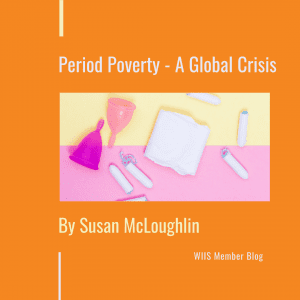
By Susan McLoughlin

Disclaimer: Although most of the research conducted around menstruation involves women and girls (which is why I often reference women and girls specifically), please remember that people of all genders menstruate, including gender-nonconforming people and transgender men.

Around the world, it is estimated that 1.9 billion people menstruate—nearly a quarter of the world’s population.[1] Yet, for many of these people, getting their period every month is a huge burden because of a phenomenon known as period poverty. According to the American Medical Women’s Association, period poverty is defined as “inadequate access to menstrual hygiene tools and education, including but not limited to sanitary products, washing facilities, and waste management.”[2] Of the people who menstruate, at least 500 million experience period poverty every month.[3]

Causes of Period Poverty

Although period poverty is a global problem, people living in low-income countries are disproportionately affected by this issue. Overwhelmingly, economic hardship is a major reason for high rates of period poverty. On average, people who menstruate use over 9,000 sanitary products in their life, and for someone already experiencing poverty, that adds up very quickly.[4]

In countries like Lebanon, where sanitary products are largely imported and there is an immense economic crisis, these products can be shockingly expensive.[5] Since the recent fall of the Lebanese currency, the pound, the price of sanitary products has risen by a staggering 500%.[6] In a report from Plan International, of the adolescent girls they surveyed in Lebanon, 66% reported they were financially unable to purchase sanitary pads.[7] As a result of the economic crisis, the Lebanese government decided to subsidize 300 “essential” imported products; although razors were deemed important enough to make the list, sanitary products were not.[8]

In a study conducted in rural western Kenya, where 63% of the population lives on less than one dollar a day, 10% of girls aged 15 or younger reported that they had transactional sex in order to receive pads.[9] This statistic shows a striking reality that the financial burden of sanitary products has put women and girls at risk of sexual exploitation and abuse. Severe period poverty is also due to a lack of physical access to these products. Andrew Trevett, UNICEF’s Kenya chief of Water, Sanitation and Hygiene, says “[T]here is also the issue of supply. Transactional sex for sanitary items happens because the items are not available in girl’s villages. In the countryside, girls are faced with no transport and can’t afford a bus fare. In some remote villages, there are no roads and there isn’t a bus service.”[10] On top of this, nearly 76% of women and girls in Kenya do not have access to adequate water and sanitation facilities when menstruating, meaning they are unable to practice menstrual hygiene management, also known as MHM.[11] MHM means being able to do things like changing your menstrual products in privacy as much as needed, using soap and water to wash parts of your body, and having access to safe facilities where you can dispose of these products.[12]

Social stigma around menstruation has also played a large role in the increase of period poverty. For example, in India, it is common for women to be considered “impure” and “unclean” during menstruation.[13] As a result, menstruating women are often prohibited from entering kitchens, participating in prayer, and touching holy books.[14] The spread of falsehoods and stigma around menstruation has led to generations of shame and secrecy around the topic. In a study done by the Tamil Nadu Urban Sanitation Support Programme (TNUSSP) in two Tamil Nadu villages, 84% of girls reported that they experienced “fear, panic, and confusion” during their first menstruation because they were never taught what menstruation is or how to prepare for it.[15] Additionally, many girls are taught to hide the purchase and disposal of sanitary products away from boys and men.[16] Since only 33.6% of women and girls in rural India use sanitary pads, many reuse and wash rags or cotton cloths as an alternative.[17] Yet, with over 163 million people in India lacking access to clean water, unhygienic conditions mean oftentimes these rags are not being washed properly, which can lead to infections such as bacterial vaginosis (BV) and urinary tract infection (UTI).[18],[19] Additionally, the pressure to keep menstruation a secret leads to many women drying these rags in dark corners of their homes, away from sunlight and fresh air.[20] These circumstances mean rags are also not being dried properly, further increasing the likelihood of infection.[21]

Period Poverty in the United States

Just like nearly every other country in the world, period poverty is also present in the United States. A survey conducted by Always, a menstrual product company, showed that 1 in 5 girls in the United States reported having missed school because they did not have access to menstrual products.[22] Despite the reality that children are missing school as a result of period poverty, only four states in the United States have laws that mandate public schools to provide menstrual products.[23] Reports also show that people of color and lower-income populations are experiencing period poverty at disproportionate rates. In a study published by BMC Women’s Health, 10% of the female college students surveyed had experienced continuous period poverty, and 14% had experienced period poverty at some point in that past year.[24] Yet, for Black and Latina women who were surveyed, these same statistics shot up to 19% and 24.5%, respectively.[25] Additionally, a study conducted in St. Louis showed that nearly two-thirds of the low-income women who were surveyed said they were unable to afford menstrual products, and many resorted to going to emergency rooms in order to obtain pads or postpartum underwear.[26]

The Impact of COVID-19

The COVID-19 pandemic has exacerbated many of the factors that cause period poverty. Firstly, the pandemic has created a global economic crisis that has disproportionately affected women. Although women make up 39% of the global workforce, they have accounted for 54% of overall unemployment.[27] As more and more women are experiencing economic hardship, rates of period poverty continue to rise. In a survey by U-Report, when asked what changes there have been in accessing menstrual products, 58% of people said that during this past year, they have had less money to buy these products.[28] On top of this, there has been a huge decrease in the physical supply of menstrual products available to people across the globe. The organization I Support Girls, which distributes menstrual products, bras, and underwear to individuals in need, reported that since the start of the pandemic, there has been a 35% increase in requests for products.[29] This has been a result of many factors, one of those being the closure of facilities that commonly offer sexual and reproductive health resources and information, like schools, health clinics, and community spaces.[30] Additionally, a report from Plan International showed that of the health professionals they surveyed across 30 different countries, 78% reported that there was “restricted access to [menstrual hygiene] products, through shortages or disrupted supply chains” as a result of the pandemic.[31]

What Does This Mean?

As a result of period poverty, there are serious consequences that menstruating people are faced with. As stated earlier, people who do not have access to or cannot afford menstrual hygiene products are often forced to use unhygienic materials such as dirty rags, which can lead to serious infection and even infertility.[32] There are also cases of people who undergo sexually exploitative measures in order to have access to these products.[33] Additionally, for menstruating children, not having access to these products often leads to them missing weeks of school or dropping out of school altogether. Without the proper products to efficiently stop their bleeding, people cannot leave their homes for the whole day in fear that they will bleed through clothes – and this fear/embarrassment is worsened with intense social stigma and the spread of misinformation about menstruation. As a result of both stigma and lack of access to hygiene products, in India, nearly 40% of students miss school during menstruation, and 1 in 5 drops out of school after their first menstruation cycle begins.[34] In addition, there have been studies that show higher rates of anxiety and depression in those who experience period poverty. In the BMC Women’s Health study cited earlier, 68% of the women who experienced period poverty every month showed symptoms of moderate to severe depression, compared to 43% in the population who had not experienced period poverty.[35] The main message here is that people who menstruate should not have to face the burden of financial, physical, mental, and social consequences just because they menstruate. Access to adequate and affordable menstrual hygiene products and management as well as education regarding menstruation is a basic human right. Yet, millions of people across the globe are being denied this right, and there is still little being done to address this issue for what it is: a global crisis.

Combatting Period Poverty

All three of the countries mentioned earlier – Lebanon, Kenya, and India – have abolished taxes on menstrual products.[36] In addition, Kenya became the first country to create a national “Menstrual Hygiene Management Policy,” which was established in 2019.[37] Although these policies should not be the only tactic used to combat period poverty, they are critical first steps. Unfortunately, these are steps the United States has not yet taken. In the United States, 30 states still consider menstrual hygiene products a “luxury,” meaning they are taxed products, and government programs such as the Supplemental Nutrition Assistance Program (food stamps) and Medicaid do not cover the cost of tampons or pads.[38],[39] In 2019, the “Menstrual Equity For All Act” was introduced in the U.S. Congress, and although it has yet to be passed, this bill was created to “increase the availability and affordability of menstrual hygiene products for individuals with limited access.” [40]

In 2018, Scotland famously became the first country in the world to make menstrual hygiene products free for all students.[41] England followed suit shortly after, in 2020, when the British Department of Education funded a scheme that also made menstrual hygiene products free for all students.[42] Later in 2020, Scotland actually expanded their legislation to make these products free to everyone who needs them.[43] These key pieces of legislation are excellent examples that period poverty can be addressed on a national level and will hopefully inspire other countries to do the same. Four states in the United States – New York, New Hampshire, California, and Illinois – have implemented similar legislation.[44] New Hampshire, California, and Illinois all require public schools to provide free menstrual hygiene products to students. New York’s legislation is the most expansive and requires not only public schools but also prisons/detention facilities and city shelters to provide menstrual hygiene products at no cost.[45]

How to Help

There are many ways that you can work to fight period poverty in your own community, state, or country:

  1. If you live in a state that does not have any legislation that addresses period poverty, call your state representative and demand that they institute laws that provide schools, prisons, shelters, etc. with free menstrual hygiene products.
  2. If you live in a state that still taxes menstrual hygiene products, call your state representative and demand that they work to remove this tax.
  3. Talk openly about menstruation with your family and friends. The more we talk about menstruation, the easier it will be to break down misinformation and stigma around it.
  4. Donate to organizations that are fighting against period poverty. Below are a few examples of great organizations that are combating this crisis:
    1. The Pad Project
    2. Period
    3. Binti
    4. Freedom4Girls
    5. The Cora Project
    6. Sustainable Health Enterprises (SHE)
    7. Days for Girls
    8. Dawrati
    9. Alliance for Period Supplies
    10. The Desai Foundation

The opinions expressed here are solely the author’s and do not necessarily reflect the opinions and beliefs of Women In International Security or its affiliates. 

References:

[1] The Kulczyk Foundation and Founders Pledge, A BLOODY PROBLEM: Period poverty, why we need to end it and how to do it, Report (Warsaw: The Kulczyk Foundation, October 2020).

[2] Alexandra Alvarez, Period Poverty, Blog (Illinois: American Medical Women’s Association (AMWA), October 31, 2019).

[3] Alison Choi, How Social Media Helps Reduce Menstrual Stigma, Blog (Washington: Borgen Project, October 30, 2020).

[4] Leah Rodriguez, 4 Questions About Period Poverty: Answered, Blog (New York: Global Citizen, January 8, 2021).

[5] Ban Barkawi, Rags to reused pads – why more Lebanese women face period poverty, Blog (Minnesota: Thomas Reuters, July 17, 2020).

[6] Ban Barkawi, Rags to reused pads – why more Lebanese women face period poverty, Blog (Minnesota: Thomas Reuters, July 17, 2020).

[7] Plan International, Periods In a Pandemic: Menstrual hygiene management in the time of COVID-19, Report (United Kingdom: Plan International, 2020).

[8] Ban Barkawi, Rags to reused pads – why more Lebanese women face period poverty, Blog (Minnesota: Thomas Reuters, July 17, 2020).

[9] Penelope A. Phillips-Howard, et al., “Menstrual Needs and Associations with Sexual and Reproductive Risks in Rural Kenyan Females: A Cross-Sectional Behavioral Survey Linked with HIV Prevalence,” The Journal of Women’s Health, Vol. 24, Iss. 10 (New York: Mary Ann Liebert, Inc., October 20, 2015).

[10] Maya Oppenheim, “Kenyan girls forced into sex in exchange for sanitary products,” The Independent (July 5, 2019).

[11] Maya Oppenheim, “Kenyan girls forced into sex in exchange for sanitary products,” The Independent (July 5, 2019).

[12] Jane Wilbur, et al. “Systematic review of menstrual hygiene management requirements, its barriers and strategies for disabled people.” PloS one, Vol. 14, Iss. 2 (February 6, 2019).

[13] Diksha Ramesh, Breaking the Silence: Taboos and Social Stigma Surrounding Menstruation in Rural India, Policy Review (Washington, DC: Georgetown Public Policy Review, July 8, 2020).

[14] Suneela Garg and Tanu Anand, “Menstruation related myths in India: strategies for combating it.” Journal of family medicine and primary care, Vol. 4, Iss. 2 (2015).

[15] Diksha Ramesh, Breaking the Silence: Taboos and Social Stigma Surrounding Menstruation in Rural India, Policy Review (Washington, DC: Georgetown Public Policy Review, July 8, 2020).

[16] Diksha Ramesh, Breaking the Silence: Taboos and Social Stigma Surrounding Menstruation in Rural India, Policy Review (Washington, DC: Georgetown Public Policy Review, July 8, 2020).

[17] International Institute for Population Sciences (IIPS) and ICF, National Family Health Survey (NFHS-4), 2015-16, Report (Mumbai: Government of India – Ministry of Health and Family Welfare, 2017).

[18] Shreehari Paliath, Despite Improvement, India Still Has Most People Without Close Access To Clean Water, Blog (Mumbai: IndiaSpend, March 20, 2018).

[19] Padma Das et al. “Menstrual Hygiene Practices, WASH Access and the Risk of Urogenital Infection in Women from Odisha, India.” PloS one Vol. 10, Iss. 6 (June 30, 2015).

[20] Padma Das et al. “Menstrual Hygiene Practices, WASH Access and the Risk of Urogenital Infection in Women from Odisha, India.” PloS one Vol. 10, Iss. 6 (June 30, 2015).

[21] Padma Das et al. “Menstrual Hygiene Practices, WASH Access and the Risk of Urogenital Infection in Women from Odisha, India.” PloS one Vol. 10, Iss. 6 (June 30, 2015).

[22] Leah Rodrigues, 4 Questions About Period Poverty: Answered, Blog (New York: Global Citizen, January 8, 2021).

[23] American Civil Liberties Union (ACLU) and Period Equity, THE UNEQUAL PRICE OF PERIODS: Menstrual Equity in the United States, Briefing Paper (New York: ACLU and Period Equity, December, 2019).

[24] Lauren F. Cardoso, et al., “Period poverty and mental health implications among college-aged women in the United States,” BMC Women’s Health, 21, Article 14 (January 6, 2021).

[25] Lauren F. Cardoso, et al., “Period poverty and mental health implications among college-aged women in the United States,” BMC Women’s Health, 21, Article 14 (January 6, 2021).

[26] Catherine Pearson, “Two-Thirds of Low-Income Women in 1 Major City Can’t Always Afford Tampons And Pads,” Huffington Post (New York: January 11, 2019).

[27] Anu Madgavkar, et al., “COVID-19 and gender equality: Countering the regressive effects,” McKinsey & Company (New York: July 15, 2020).

[28] U Report Global, Menstrual Hygiene Day 2020, Report (U Report Global, May 28, 2020).

[29] See I Support the Girls, Coronavirus Response (Maryland: http://www.isupportthegirls.org/).

[30] Leah Rodrigues, 4 Questions About Period Poverty: Answered, Blog (New York: Global Citizen, January 8, 2021).

[31] Plan International, Periods In a Pandemic: Menstrual hygiene management in the time of COVID-19, Report (United Kingdom: Plan International, May 28, 2020).

[32] Neelofar Sami, et al., “Risk factors for secondary infertility among women in Karachi, Pakistan.” PloS One, Vol. 7 No. 4 (April 27, 2012).

[33] Maya Oppenheim, “Kenyan girls forced into sex in exchange for sanitary products,” The Independent (July 5, 2019).

[34] IANS, “How COVID-19 impacted menstrual hygiene in India,” Telangana Today (February 16, 2021).

[35] Lauren F. Cardoso, et al., “Period poverty and mental health implications among college-aged women in the United States,” BMC Women’s Health, 21, Article 14 (January 6, 2021).

[36] My Period is Awesome, The Period Tax Around the World, Blog (Sweden: My Period is Awesome, October 12, 2020).

[37] Ministry of Health, Menstrual Hygiene Management Policy (Republic of Kenya: Ministry of Health, 2019).

[38] Deborah D’Souza, Tampon Tax, Blog (New York: Investopedia, February 16, 2021).

[39] Brittany Wong, “The COVID-19 Pandemic Is Making ‘Period Poverty’ Worse,” Huffington Post (January 22, 2021).

[40] H.R.1882 – 116th Congress (2019-2020): “Menstrual Equity For All Act of 2019.” (May 3, 2019). https://www.congress.gov/bill/116th-congress/house-bill/1882/text

[41] Nadia Khomami, “Scotland to offer free sanitary products to all students in world first,” The Guardian (August 24, 2018).

[42] Richard Adams, “Free period products to be available in schools and colleges in England,” The Guardian (January 17, 2020).

[43] Megan Specia, “Tackling ‘Period Poverty,’ Scotland is 1st Nation to Make Sanitary Products Free,” New York Times (November 24, 2020).

[44] American Civil Liberties Union (ACLU) and Period Equity, THE UNEQUAL PRICE OF PERIODS: Menstrual Equity in the United States, Briefing Paper (New York: ACLU and Period Equity, December, 2019).

[45] Emma Goldberg, “Many Lack Access to Pads and Tampons. What Are Lawmakers Doing About It?” New York Times (January 13, 2021).

By Ana Blatnik

As it turns out, gender stereotyping and biases that have had a serious impact on women’s safety in the physical world now appear in our social media feeds. This may not be surprising in itself, but the severity of consequences brought about by these threats is. From the 2016 US presidential elections to a year-long Ukrainian smear campaign against a woman parliamentarian, we now have recorded examples of gendered disinformation campaigns that successfully framed public debates about politicians and, terrifyingly, influenced voters’ views. As such, this article focuses on highlighting the threat to democracy posed by online gendered disinformation campaigns targeting women politicians and explores potential solutions.

What is gendered disinformation?

To begin with, two main differing terms co-exist under the umbrella of what is colloquially known as fake news: misinformation and disinformation. Misinformation is the word used for “false information shared with no intention of causing harm.”[1] Disinformation, on the other hand, contains the intent to harm in some way.[2] Because a growing body of research shows that false information is directly used with the intent to negatively impact the person concerned, especially when it comes to gendered falsehoods, this article uses the term disinformation throughout.

Disinformation is gendered if it targets women on the basis of their identity as women.[3] Research shows at least one of two contrasting approaches is usually taken when it comes to online attacks on women politicians. First, there is the presentation of women leaders as enemies and, secondly, as victims without agency.[4] In doing so, rather than directly attacking the policy decisions women make, as is the case with male politicians, gender stereotypical characteristics (like being emotional or polite) and physical appearance are used instead to challenge female politicians.[5] Such disinformation may come in different forms, from harmful graphics to conspiracy theories. A known example of graphics usage is the case of Ukrainian parliamentarian Svitlana Zalishchuk who, following a pro-women’s rights UN speech, experienced a year-long social media disinformation campaign consisting of fabricated sexualized information and images.[6] Sadly, this is just one of many examples, with research showing that nearly 42% of women politicians have seen “extremely humiliating or sexually charged images of themselves” online.[7] A well-researched instance is the 2016 US presidential election, when Hillary Clinton was demonized through fabricated evidence of involvement in trafficking scandals and misconstrued videos about the state of her health.[8] In either case, the disinformation focused on objectification and reinforcement of gender stereotypical characteristics.

What does it mean for women?

As highlighted above, a common result of disinformation campaigns is that the female politician’s fitness to lead is undermined. An obvious consequence of such is that negative public debate surrounding her is either initiated or amplified and that the woman politician concerned will find it harder to work effectively.[9] Another devastating consequence is that women who observe these attacks happening to others may hesitate entering politics in the first place. This kind of effect has been seen in the Georgian pre-election period when several female politicians signaled their intention to run and became targets of a smear campaign filled with fabricated intimate videos.[10] One research study that interviewed over eighty women politicians and experts shows gender-based abuse and disinformation in the digital space presents a serious “barrier for women who want to engage in politics and a serious disincentive for young women to consider a political career.”[11] Therefore, the direct negative consequences for the women targeted also confirm this chain effect as a challenge for women pursuing a political career.

What does it mean for democracy?

Any disinformation campaign that targets politicians should also be of utmost concern because of its serious implications for democracy. As part of a democratic society, voters can participate in public debates as well-informed citizens and have full freedom of expression in doing so.[12] In facilitation of these rights, voters must have access to impartial, fact-based sources of information so they can form their opinions in the first place.[13] When people are disinformed, however, this is not possible, and so the democratic process is directly impeded. In many cases, this kind of influence on people’s minds can also be seen as election interference – a goal of many state-sponsored disinformation campaigns.[14] The risk of having disinformed voters can hardly be ignored when online campaigns usually target marginalized groups, such as women, and where stereotypes and biases are more often than not already present in voters and therefore easily amplified and abused.

What are the possible solutions?

Regulations

When it comes to moderating information available online, there are ongoing debates about the most productive and ethical approach. The first and milder form is information regulation, where the content flagged as false is accompanied with fact-checked information.[15] Certain social media platforms have experimented with this system during Covid-19: any mention of the pandemic on the platform would include a link to a credible source of information.[16] An alternative to platform-led regulation is co-regulation, where requirements for posting of fact-checked information are mandated by legislative and regulatory bodies.[17] At the same time, however, it is important to note that some research suggests corrective techniques have questionable effectiveness because people are often “resistant to information correction.”[18] This has proven to be especially relevant when it comes to psychological biases, such as gender bias, and suggests other methods need to be considered as well.

Mandated removal of disinformation is a potential alternative in cases where the addition of fact-checked information is not deemed to be productive. In such cases, the legislative and regulatory bodies set the parameters for social media platforms or independent bodies to carry out the regulations.[19] Governments in countries like France, Germany, and Canada have attempted to adopt this approach. Their efforts range from empowering authorities, removing false information, and imposing fines on platforms for not removing the deceptive material.[20] For gendered issues specifically, however, training would also be necessary to ensure the programs and individuals responsible for spotting false information take into account the fact that gendered speech has become the norm on many platforms.[21] At the same time, this process requires clear proportionality boundaries between the impact of any piece of false information and preservation of free speech, which is subject to ongoing debate.

Awareness Raising

At the same time, the effectiveness of gendered disinformation campaigns is fully dependent on the impact it has on voters. If every person used critical thinking when engaging online, the prevalence of such campaigns would likely decrease. As such, states and social media platforms must also focus on awareness-raising and the critical involvement of informed citizens. In fact, several countries have implemented cyber education initiatives.[22] For example, Belgium has invested in projects that inform people about disinformation and include them in finding solutions.[23] The UK’s education secretary announced in 2019 that online safety, including about false information, will be taught in schools.[24] Ahead of the latest European Union elections, the Dutch government launched a social media campaign with the goal of increasing users’ awareness about false information.[25] If such initiatives reach enough people, they can become a powerful tool in ensuring that voters are equipped to spot the disinformation online when other options for correction or removal have been exhausted.

What about a gendered lens in solutions?

However, it is important to point out that these initiatives rarely include considerations of gender, despite the fact that identity-based attacks have specific working mechanisms. Given the presence of subconscious biases, many voters may already hold some of the beliefs being perpetuated by such disinformation. In a similar vein, social media platform moderators may fail to spot the disinformation because stereotypes and biases about marginalized groups have not been adequately flagged in their systems.[26] For these reasons, it is all the more important that the issue of disinformation and the potential solutions start to be analyzed through a gendered lens at the policy making level and within social media platforms.

For that to happen, raising more awareness about the unique dangers faced by women politicians online needs to occur, and more pressure must be put on social media platforms to ensure moderation mechanisms spot gendered disinformation in the first place. While the US Democratic Women’s Caucus, along with Speaker Nancy Pelosi and over a hundred women politicians across the world, sent a letter urging Facebook to do their part in curbing gendered disinformation campaigns already, by no means should this be a battle fought only by women politicians.[27] As this article and much of the research looking at the impact of gendered disinformation makes clear, the campaigns also infringe on voters’ rights and can have lasting impacts on democracy. As such, curbing gendered disinformation online should be everyone’s concern.

What you can do today:

  • Find fact-checking websites relevant to your region and topics of interest. For example, if interested in the European Union politics, EU Fact Check looks at the accuracy of political statements made about current issues.
  • If available, always check multiple sources on the same topic when reading the news.
  • Look into and, if possible, support organizations that recognize gendered disinformation is a problem and advocate for solutions. An example of such is the EU Disinfo Lab, which has studied and written about gendered disinformation campaigns to highlight the issue.
  • Research the ways in which you could bring up the issue to relevant authorities in your country of residence and challenge your public representatives on what they have done to address disinformation and to support women politicians who are the targets of disinformation campaigns.
  • Most importantly, continue to educate yourself about gender stereotypes and biases so you can recognize them when interacting with news about women politicians online, especially in election periods. The WIIS website has a Resources page that may be a good starting point in that regard.

The opinions expressed here are solely the author’s and do not necessarily reflect the opinions and beliefs of Women In International Security or its affiliates. 

Endnotes

[1] Sharia Hinds, “The European Union approach to disinformation and misinformation: The case of the 2019 European Parliament elections,” University of Strasbourg (2019), https://repository.gchumanrights.org/bitstream/handle/20.500.11825/1103/Hinds.pdf?sequence=1&isAllowed=y

[2] Ibid.

[3] Maria Giovanna Sessa, “Misogyny and Misinformation: An analysis of gendered disinformation tactics during the COVID-19 pandemic,” Disinfo Lab EU (December 4, 2020), https://www.disinfo.eu/publications/misogyny-and-misinformation:-an-analysis-of-gendered-disinformation-tactics-during-the-covid-19-pandemic/.

[4] Ibid.

[5] Lucinda Di Meco and Kristina Wilfore, “Gendered Disinformation is a a national security problem,” Brookings (March 8, 2021) https://www.brookings.edu/techstream/gendered-disinformation-is-a-national-security-problem/; Jackie Speier et al., “Democratic Women’s Caucus, Speaker Pelosi Send Letter to Facebook Demanding it Stop the Spread of Gendered Disinformation and Misogynistic Attacks Against Women Leaders,” Congresswoman Jackie Speier in letter to Mark Zuckerberg and Sheryl Sandberg (August 6, 2020), https://speier.house.gov/?a=Files.Serve&File_id=6C8EEC9E-EADF-4AAC-A416-3859703EEFC4.

[6] Jankowicz, Nina, et al. “Malign Creativity: How gender, sex and lies are weaponized against women online” Wilson Center, (January 2021), https://www.wilsoncenter.org/sites/default/files/media/uploads/documents/Report%20Malign%20Creativity%20How%20Gender%2C%20Sex%2C%20and%20Lies%20are%20Weaponized%20Against%20Women%20Online_0.pdf; “Gendered disinformation and what can be done to counter it,” Media Support (May 4, 2021). https://www.mediasupport.org/news/gendered-disinformation-and-what-can-be-done-to-counter-it/;

Nina Jankowicz, “HOW DISINFORMATION BECAME A NEW THREAT TO

WOMEN,” World Policy (December 20, 2017), http://worldpolicy.org/2017/12/20/how-disinformation-became-a-new-threat-to-women/.

[7] Jackie Speier et al., Democratic Women’s Caucus.

[8] Stabille, Bonnie, et al. “Sex, Lies, and Stereotypes: Gendered Implications of Fake News for Women in Politics.” Public Integrity, (2019), https://www.tandfonline.com/doi/abs/10.1080/10999922.2019.1626695.

[9] Lucinda Di Meco and Kristina Wilfore, Gendered Disinformation.

[10] Nina Jankowicz, How Disinformation Became a New Threat.

[11] Ibid.

[12] Colomna, Carme, et al. “The impact of disinformation on democratic processes and human rights in the world.” European Parliament, (2021), https://www.europarl.europa.eu/RegData/etudes/STUD/2021/653635/EXPO_STU(2021)653635_EN.pdf.

[13] Ibid; Sharia Hinds, The European Union approach:

“Digital Economy and Society Index 2018 Report.” European Commission (2018), https://ec.europa.eu/digital-single-market/en/news/digital-economy-and-society-index-2018-report.

[14] Colomna, Carme, et al., The impact of disinformation.

[15] Helm, Rebecca K and Hitoshi Nasu. “Regulatory Responses to ‘Fake News’ and Freedom of Expression: Normative and Empirical Evaluation,” Human Rights Law Review, (2021), https://academic.oup.com/hrlr/article/21/2/302/6129940.

[16] “Keeping People Informed, Safe, and Supported on Instagram,” Instagram (March 24, 2020). https://about.instagram.com/blog/announcements/coronavirus-keeping-people-safe-informed-and-supported-on-instagram; “Supporting our community through COVID-19,” TikTok (2021), https://www.tiktok.com/safety/en-us/covid-19/.

[17] Sharia Hinds, The European Union approach.

[18] Helm, Rebecca K and Hitoshi Nasu. Regulatory Responses to ‘Fake News.

[19] Sharia Hinds, The European Union approach.

[20] Helm, Rebecca K and Hitoshi Nasu, Regulatory Responses to ‘Fake News’

Sharia Hinds, The European Union approach: Melanie Ehrenkranz, “France’s President Macron Wants to Block Websites During Elections to Fight ‘Fake News’,” Gizmodo (2018), https://gizmodo.com/frances-president-macron-wants-to-block-websites-during-1821770692; Daniel Funke and Daniela Flamini, “A guide to anti-misinformation actions around the world. Poynter,” (n.d.). https://www.poynter.org/ifcn/anti-misinformation-actions/; Nagasako, Tomoko. “Global disinformation campaigns and legal challenges.” International Cybersecurity Law, (2020), https://link.springer.com/article/10.1365/s43439-020-00010-7; Rachel Aiello, “Feds unveil plan to tackle fake news, interference in 2019 election,” CTV News (February 27, 2019), https://www.ctvnews.ca/politics/feds-unveil-plan-to-tackle-fake-news-interference-in-2019-election-1.4274273.

[21] “Understanding the gender dimensions of disinformation,” Countering Disinformation (April 1, 2021), https://counteringdisinformation.org/topics/gender/1-gender-considerations-counter-disinformation-programming.

[22] “Digital Economy and Society Index 2018 Report,” European Commission (2018), https://ec.europa.eu/digital-single-market/en/news/digital-economy-and-society-index-2018-report.

“Bienvenue sur la plateforme fédérale de consultation citoyenne,” Stop Fake News (2021), https://monopinion.belgium.be/?locale=fr; Jessica Murray, “Schools to teach pupils about perils of fake news and catfishing,” The Guardian (June 26, 2019), https://www.theguardian.com/technology/2019/jun/26/schoolchildren-to-get-online-safety-advice-on-catfishing-and-fake-news.

[23] Stop Fake News, Bienvenue Sur La Platforme.

[24] Jesssica Murray, Schools To Teach Pupils.

[25] Rachel Aiello, Feds Unveil Plan To Tackle Fake News.

[26] Countering Disinformation, Understanding The Gender Dimensions.

[27] Jackie Speier Et Al., Democratic Women’s Caucus.

By Ann-Kathrin Rothermel[1]

Persistence of Anti-gender Narratives

Towards the end of January 2022, a Canadian trucker movement, which calls itself “Freedom Convoy,” made headlines for its loud and partially violent reaction to cross-border vaccination mandates between the United States and Canada. The protests quickly devolved into a mix of anti-government and far-right activism, with common appearances of both Confederate flags and references to the January 6 insurrection. This is just one example that shows how anti-lockdown, anti-mask, and anti-vaccine talking points have become a new battleground for the far right. While the overlap between Covid-19 and far-right activism has been recognized and discussed by both journalists and academics, there has been little to no discussion of the similarity with anti-gender movements of the 2010s.

Back then, cross-border movements mobilized in opposition to what they called “gender ideology” across Europe and the Americas. ”Gender ideology” has been called an empty signifier because it is so ambiguous and imprecise that it has served as a canvas for a range of right-wing grievances such as the right to same-sex marriage, abortion, and the inclusion of queer experiences in school curricula. At the core of these different “anti-gender” grievances lies a rejection of the knowledge that gender is socially constructed and expands the binary of male and female. While anti-gender movements have lost most of their popular momentum over the last decade—with the exception of the United States, where another wave of protests of queer learning material has just recently made the news—the rejection of gender diversity has since become a staple of the far right and has united supporters across geographic locations.

Comparing these anti-gender discourses to the discourses that underline recent anti-Covid movements can provide new insight into both the role of gender in the current anti-vaccine mobilizations as well as expose how both narratives reject academic evidence and dehumanize those who are already vulnerable in society.

“Good Science” and “Bad Science”

One important aspect, which unites the narratives around gender and the pandemic, is the rejection of academic knowledge. The long-standing anti-intellectualism that is part of right-wing populist discourses benefits from viewing the university as a detached ivory tower where elites are plotting against the people. The strong narrative of universities as spaces of radical left-wing or “cultural Marxist” propaganda can easily be mobilized to discredit scientific analysis.

During the last decade, this anti-academic viewpoint was mostly confined to social sciences and gender studies. The attack on social sciences by branding them as illegitimate propaganda was most obviously pushed by Hungary’s Prime Minister Viktor Orban, who succeeded in abolishing gender studies throughout Hungary. But this strategy is not specific to Europe; it has advanced across many countries and continents. For example, in the United States, Fox News’ Tucker Carlson, a right-wing media figure, is known to hold grotesque views about gender studies. In a recent show, he blamed gender studies for the failure of the U.S. intervention in Afghanistan. Carlson often uses references to the natural sciences to bolster his claims and justify the rejection of social sciences, thereby pitting “real sciences” such as biology against a ”fake” social science, even though most biological studies confirm rather than disprove gender diversity.

In the context of the Covid-19 pandemic, this division of “good science” and “bad science” is being challenged. Anti-Covid-19 measures such as vaccines, lockdowns, and masking are products of academic research and thus open to criticism. Public health expertise is targeted because it is a field that intersects the social and natural sciences, but the ire of anti-vaxxers also stretches into the very heart of natural sciences when disputing and attacking the results of medical and biological studies. The pandemic has moved right-wing discourses from a rejection of social sciences towards a more general rejection of science and academic authority as such (except for some handpicked “real” academics who happen to defend right-wing causes).

Academic Knowledge versus “Common Sense”

As an important means to justify this rejection of science and academic institutions of knowledge, right-wing discourses creates a dichotomy between the rational, reasonable, and “common sense” knowledge of the many against the irrational, brainwashed, and hysterical zealots on campus who have fallen prey to the propaganda of a powerful elite. In the context of anti-gender activism, this representation is captured in the image of the “Social Justice Warrior” (SJW). This image has made its way from the far-right fringes of the internet to the mainstream and has been disseminated in countless memes (like the one below). It is highly gendered and ripe with misogynist stereotypes. The image constructs the mostly female SJW as irrational, hysterical, and incompetent and someone backed by a supposedly powerful academic elite. Due to the irrational rage females are accused of holding, the SJW is also depicted as willing to inflict violence on those who disagree with them on “leftist topics” of social justice. Prominently displayed topics include gender identity and vaccines. Identifying academic experts in gender studies and (public) health as irrational but simultaneously powerful and violent serves to both delegitimize academic expertise and justify the resistance against it as an act of self-defense borne from reason and common sense.

Leftist sjws are actually some of the most intolerant people | EXCEPT ANYONE WHO DISAGREES WITH ME ON GENDER IDENTITY, PRONOUNS, GIVING PUBERTY BLOCKERS TO CHILDREN, LGBT CHARACTERS ON TV SHOWS, EDGY HUMOR I DON'T LIKE, WHICH POLITICIANS SHOULD BE ELECTED, LOCKDOWNS, MASKS AND VACCINES! THEY ARE ALL RIGHT-WING NAZI SCUM AND DESERVE TO DIE! I'M A LEFTIST, I BELIEVE IN BEING LOVING, KIND AND TOLERANT TO ALL PEOPLE | image tagged in social justice warriors,angry sjw,intolerance,liberal hypocrisy,triggered feminist,regressive left | made w/ Imgflip meme maker

SJW meme from: https://imgflip.com/i/5nce39

Constructing “Physical” Threats

Falsely casting one’s own activism as self-defense against oppression is an element that unites right-wing populist and fascist mobilizations across geographical and social contexts[2]. A striking parallel between anti-gender and anti-vaccine narratives is how the threats they claim they are responding to are framed as a direct threat to the integrity and autonomy of the physical body. Disregarding the fact that the idea of gender diversity is closely related to the fight for rather than against bodily autonomy, anti-gender “ideology” narratives almost always assert that the intent of gender advocates is to break down the binary heterosexual body and replace it with a gender-less ideal. This counterargument is based on right-wing advocacy’s core conviction that a person’s body must not be anything other than one compliant with cis-hetero norms. Different bodies thus automatically become a threat to one’s own body, an assertion common in anti-trans discourses. In the case of vaccines, masks, and lockdowns, the connection of this right-wing position with one’s own body is even more directly tangible. A particularly powerful (while false) claim of the right has been that mRNA vaccines change the DNA of those vaccinated.

Another area that deserves particular attention and that plays a crucial role in both discourses is “the child.” The idea that children suffer extraordinarily from masks, vaccines, and lockdowns has been central throughout the pandemic, even though their exposure to the virus has not provoked the same level of concern and resistance. There was fierce resistance by some parents to school closures and school vaccination in the name of children’s safety (while at the same time some students advocated for more measures). This shows similarity to the narrative in conservative discourses that frame gender equality and anti-racist education materials in schools as undue state interference into family life. At the root of this narrative is the idea of a family as an apolitical unit. This is an assumption that has always been contested by feminist theorists and activists because it obscures how exclusionary and violent structures in society have been reproduced for centuries through family politics.

The Result: The Politics of Dehumanization

It is this obscuring of the exclusion and violence of existing societal structures, or more precisely in the process of dehumanization that accommodates them, where the most horrific of the overlaps between the right’s anti-gender and anti-vaccine discourses are found. At their heart, both gender equality policies and many anti-pandemic measures serve and protect groups that are particularly vulnerable, both due to their physical health and their sexual and gender identities. Moreover, the pandemic and gender-based violence have been shown to interact with racist and classist societal structures to disproportionately affect communities of color. While anti-Covid measures such as masks, vaccines, and lockdowns tend to be justified in a variety of ways (some more, some less problematic), they do offer a way to protect those most vulnerable to the virus. In a similar way, feminist policies are mostly have been geared towards those who are particularly vulnerable to the (social) pandemic of patriarchy.

Upholding the rights of LGBTIQ+ persons is meant to counter the structural and interpersonal violence they experience under the status quo. The direction of right-wing discourses is the opposite. Right-wing discourses do not simply deny the need for vaccines and gender equality; they deny the very existence and legitimacy of those whose lives depend on such policies. In both discourses, this becomes blatantly obvious in the much-voiced assurance: “There are not many of those.” Such discourses neglect the real-life experiences of all those who are not young, able-bodied, cis, hetero, or white carriers of privilege. While this has always been obvious in anti-gender discourses, where those experiences are often simply presented as lies, the anti-Covid discourse exposes even more blatantly the absolute and unimaginable violence of right-wing bio-politics.

The goal of feminist advocacy has always been to make visible the abuse suffered at the hands of the discriminatory structures of inherently racist and cis-hetero-patriarchy that is the basis of society. As has become clear from the parallels in right-wing discourses on both gender and the pandemic, this includes those whose lives and health are at stake because of the Covid-19 pandemic, many of whom are also the victims of the systemic intersecting pandemics of capitalism, racism, and patriarchy. While this is not always necessarily the case, from an intersectional and standpoint feminist perspective, advocating for those vulnerable to the health effects of the pandemic must therefore also be a natural part of feminist advocacy.

The opinions expressed here are solely the author’s and do not necessarily reflect the opinions and beliefs of Women In International Security or its affiliates.

Ann-Kathrin Rothermel is a Ph.D. student and research associate at the University of Potsdam and a research affiliate at the Berlin Graduate School for Global and Transregional Studies. She is also a Fellow with the Institute for Research on Male Supremacism. Her research focuses on the role of gender in regard to both radicalization and counter-radicalization in terrorism and violent extremism. After having completed a fellowship at the United Nations Secretariat in New York, she started her Ph.D. in 2016 focusing on gendered discursive struggles in the context of global counterterrorism reform by the UN. She has published several articles on the radicalization in antifeminist, male supremacist online movements.

[1] A different version of this article was published at: https://blogs.lse.ac.uk/gender/2022/04/11/what-anti-gender-and-anti-vaccines-politics-have-in-common-the-construction-of-gender-and-the-covid-19-pandemic-in-right-wing-discourses/

[2] Ruth Wodak, The Politics of Fear, What Right-Wing Populist Discourses Mean (Los Angeles: SAGE, 2015).

By Claire Harrison

In late January 2022, following a series of Houthi rebel strikes on its territory, the United Arab Emirates targeted several civilian infrastructure sites in Yemen that included a water facility.[1] Nine days later, an investigation by The New York Times revealed that in March 2017, the United States targeted a dam in Syria that was on the “no strike list.”[2] Both events circulated in the media on the same day, pointing to a historical trend of weaponizing water in war. As climate change further exacerbates water insecurity in much of the world, the disproportionate impacts of water scarcity on women and girls must be pushed further into the spotlight.

The January strike was not the first time the Saudi-led coalition, of which the UAE is a member, hit civilian targets, and specifically water sites in Yemen.[3] Such attacks have outsized effects on a country that suffers from climate change-induced water scarcity, lack of clean water access, and rampant water-borne diseases.[4] The January 11 strike destroyed a water reservoir in the Sahar district of Sa’da Governorate, which supplies water to over 130,000 people.[5] The 2017 attack in Syria knocked out the Tabqa Dam on the Euphrates River north of Raqqa, controlled at the time by the Islamic State. It thus became a high value target, despite not being on any official U.S.-led coalition target list. The New York Times report revealed that the Tabqa Dam bombing took place after a top-secret U.S. Special Operations unit used a procedural shortcut reserved for emergencies to circumvent the chain of command and drop the bombs despite official warnings against the action.[6] In spite of the horrific humanitarian implications, flooding tens of thousands of people out of an area and depriving many more of electrical power and water supply may well be a tempting strategy for state and non-state combatants alike. Indeed, U.S. Central Command told The New York Times the bombs “prevented ISIS from weaponizing” the dam against the people of Northeast Syria, demonstrating how the same logic around water could apply to both sides of a conflict.[7]

Furthermore, grievances over water insecurity and lack of access were one of several factors culminating in the 2011 revolutions in Syria and Yemen. As freshwater resources evaporate and water scarcity becomes a truly existential threat for many populations, the monetary and identity value of water resources will skyrocket. This pattern of targeting water resources will accelerate, and water will become a driving factor for conflict. To be sure, many of the water scarcity challenges exacerbated by climate change are also attributable to weak governance and obstruction. However, both man-made and climate-driven accelerants of water scarcity create a negative feedback loop, exacerbating each other and driving up the value of water. As the earth heats up and resources evaporate, clean and safe water is often the first to disappear, leaving entire villages and sometimes countries arid. The price of water rises in parallel, and it is the lack of water that causes desperation and potential violence, not the cause of this scarcity.

When water becomes scarce, it is more likely to be monopolized and weaponized by groups seeking to capitalize upon desperation and fear as a means for legitimization and power. In many cases, the government’s inability to adequately meet its peoples’ needs further pushes people into jeopardy. This dynamic contributed to the entrenchment of groups like Al Shabab and Boko Haram in water-poor areas and their effective manipulation of water security as a recruitment tactic and funding mechanism.[8] It is also what made civilian water infrastructure compelling targets in Syria and Yemen.

When a water crisis strikes, the entire population suffers, but climate change and water scarcity extract the highest price from women and girls. This is especially true for those who are already left behind or made invisible by the circumstances of conflict. At the opening session of the United Nations Commission on the Status of Women’s annual meeting on March 14, 2022, Undersecretary General Sima Bahous explained: “Women suffer most when local natural resources including food and water come under threat, and have fewer ways to adapt.”[9] In many water-poor countries, women and people who identify as women are heads of households and devote a significantly higher proportion of their time to unpaid domestic activities. Most of these activities are water-intensive, such as laundry, cooking, and cleaning. This means women often have a greater role in day-to-day clean water management and provision and understand the stakes, while men are more likely to control the financing and distribution. Thus, when water becomes scarce, it is women who are left to deal with the practical implications of water insecurity.

Further, when conflict breaks out, women in these situations are impacted in ways citizens of water-rich countries often do not consider. In countries where weak government institutions translate to a lack of adequate and equitable water management, there is often one source of water shared between communities and at a great distance from the home. It is frequently women’s responsibility to make the journey to collect remote freshwater. When water decreases in availability, this trek becomes longer and consumes more energy and time, leaving women less able to address additional responsibilities and less able to pursue personal means of economic fulfillment. This burden is even greater for rural women who are already more likely to be further from water sources, distribution sites, or the reaches of government assistance. When conflict erupts, not only do these water sources themselves become sites of violent clashes, but the journey to obtain water becomes increasingly dangerous.

The disproportionate impact on women and girls is evident in places such as the Syrian city of Raqqa. As a result of the U.S.-led coalition and the Islamic State both targeting water resources around Raqqa, returnees to a liberated city suffered shortages of clean running water and sanitation facilities. For the women returnees, these problems led to a number of specific gynecological problems like urinary tract infections and cystitis.[10] Children filled clinics in Raqqa city, plagued with respiratory illnesses, infections, and gastrointestinal distress, and one of the main causes was dirty water.[11] In Yemen, water scarcity combined with ineffective governance in government-controlled areas and Houthi control in other regions increased stress on women and girls, who bore the brunt of responsibility for collecting water and rationing its use in the household.[12] This in turn led to women increasingly dealing with health issues associated with expending the energy, time, and stress required to obtain water when food is scarce. Women were forced to stand for long periods of time in scorching heat and were exposed to sexual harassment and violence, depending on the time of day and length of time spent collecting water.[13] COVID-19 has only made this crisis in Yemen worse.

But this intimate connection between women, water, and climate change also holds the potential keys to resolution. When women are the community arbiters of water distribution and are most intimately involved with the movement of water resources and consequences of water scarcity in day-to-day life, they also become sources of vital contextual knowledge necessary to a conflict-sensitive approach to conflict arbitration, mitigation, and prevention. As the frameworks for water peace developed over the last few decades become less relevant and effective, there is an opportunity for the international community to practice climate diplomacy and push for new conflict resolution frameworks inclusive of gender and resource scarcity.

This policy brief was prepared by the author in their personal capacity. The opinions expressed here are the author’s own and do not necessarily reflect the views or policy of WIIS.

Claire Harrison is a 2021 WIIS Next Generation Scholar, a national security professional, and a research analyst. Her work focuses on climate security in the MENA region, institutional capacity building, and natural resources as a catalyst for violent conflict. She has previously served as a Research Associate in the Joint Advanced Warfighting Division at the Institute for Defense Analyses, as well as in various Middle East policy research roles at the U.S. Institute of Peace, the Center for Strategic and International Studies, and the State Department. Harrison holds an MA in Strategic Studies and International Economics from The Johns Hopkins School of Advanced International Studies in Washington, DC, an ML in Chinese Politics and Foreign Policy from Tsinghua University in Beijing, and a BA in Middle East Studies and Political Science from Sciences Po Paris.

Endnotes

[1] Colm Quinn, “Houthis Strike Abu Dhabi as Yemen War Drags On,” Foreign Policy, January 18, 2022, https://foreignpolicy.com/2022/01/18/houthis-uae-abu-dhabi-yemen/; Shuaib Almosawa, Vivian Yee, and Isabella Kwai, “Yemen’s Houthi Militia Claims Rare Military Strike on U.A.E.,” The New York Times, January 17, 2022, https://www.nytimes.com/2022/01/17/world/middleeast/uae-attack-yemen-houthi.html.

[2] Dave Phillips, Azmat Khan, and Eric Schmitt, “A Dam in Syria was on a ‘No-Strike’ List. The U.S. Bombed It Anyway,” The New York Times, January 20, 2022, https://www.nytimes.com/2022/01/20/us/airstrike-us-isis-dam.html.

[3] “Why did the Houthis attack the UAE? Everything you need to know,” Al Jazeera, January 31, 2022, https://www.aljazeera.com/news/2022/1/31/explainer-a-simple-guide-to-the-uae-houthi-escalation.

[4] Collin Douglas, A Storm Without Rain: Yemen, Water, Climate Change, and Conflict, Briefer No. 40: August 3, 2016; “Goal 6: Clean water and sanitation,” from Yemen, UNDP, https://www.ye.undp.org/content/yemen/en/home/sustainable-development-goals/goal-6-clean-water-and-sanitation.html#:~:text=Less%20than%2055%20per%20cent,many%20sub%2DSaharan%20African%20countries; WHO Regional Office for the Eastern Mediterranean, “Cholera Situation in Yemen,” Document no. WHOEM/CSR/434/E, World Health Organization, April 2021.

[5] “Press briefing notes on Yemen,” delivered by Spokesperson for the UN High Commissioner for Human Rights: Ravina Shamdasani, UN Office of the High Commissioner for Human Rights, January 18, 2022, https://www.ohchr.org/en/2022/01/press-briefing-notes-yemen.

[6] Phillips et. al., “A Dam in Syria was on the ‘No-Strike List’,” The New York Times.

[7] Ibid.

[8] Halima Gikandi, “The group behind Nairobi’s recent terror attack recruits young people from many faiths. Officials can’t stop it,” GlobalPost, January 25, 2019, https://theworld.org/stories/2019-01-25/group-behind-nairobi-s-recent-terror-attack-recruits-young-people-many-faiths; Mervyn Piesse, “Boko Haram: Exacerbating and Benefiting From Food and Water Insecurity in the Lake Chad Basin,” Future Directions International, September 19, 2017, https://reliefweb.int/sites/reliefweb.int/files/resources/Boko-Haram-Exacerbating-and-Benefiting-From-Food-and-Water-Insecurity-in-the-Lake-Chad-Basin_0.pdf; Laura Heaton and Nichole Sobeki, “Somalia’s Climate for Conflict,” The GroundTruth Project, April 19, 2017, https://thegroundtruthproject.org/somalia-conflict-climate-change/.

[9] Edith M. Lederer, “UN says women pay the highest price in conflict, now in Ukraine,” Associated Press, March 15, 2022, https://apnews.com/article/russia-ukraine-climate-united-nations-general-assembly-afghanistan-business-65f0ac994ed0a270b1bff5c40106f509.

[10] Arianna Pagani and Sara Manisera, “‘The world forgot us’: Women and healthcare in ruined Raqqa,” The New Humanitarian, January 8, 2019, https://www.thenewhumanitarian.org/photo-feature/2019/01/08/world-forgot-us-women-and-healthcare-ruined-raqqa.

[11] Ibid.

[12] Ashraf Al-Muraqab, “A daily struggle to fetch water,” Yemen Times, September 17, 2012, https://reliefweb.int/report/yemen/daily-struggle-fetch-water.

[13] Margaret Habib, “COVID-19 Exacerbates the Effects of Water Shortages on Women in Yemen,” Wilson Center, August 20, 2020, https://www.wilsoncenter.org/blog-post/covid-19-exacerbates-effects-water-shortages-women-yemen.

By Claire Pamerleau, University of Pittsburgh WIIS Chapter

The women of Afghanistan are living through oppression that most feared would only return in nightmares.

Since the withdrawal of US troops and the Taliban’s takeover in August of 2021, Afghan women have been left with few options: flee your own country, or stay and have your rights, livelihood, identity—and in some cases, your safety—taken from you.

Many of us around the world remember reading about and seeing pictures of the chaos in Kabul’s airport last fall when thousands of Afghans desperately tried to board the last flights out of the country.[1] For many Afghans, though, fleeing was not an option. The women of Afghanistan who stayed behind are now living through mounting social and economic restrictions.

In August of 2021, Zabihullah Mujahid, spokesman for the Taliban, promised the Taliban would respect women’s rights in accordance with Islamic, or Sharia, law.[2] While this claim was vague, the Taliban did originally state that girls could return to school and that women could leave the house without any chaperones, “encourag[ing]” them to return to work.[3] Furthermore, the Taliban initially assured Afghans that revenge would not be taken, stating “all those who have served the state will be forgiven.”[4]

This tone quickly proved to be disingenuous. By late August, Talibs were seen going through female journalists’ neighborhoods, knocking on doors, and “making lists of women who worked in the media and government.”[5] The Taliban has shut down women-led human rights organizations, and they have replaced the Ministry of Women’s Affairs with the Ministry of Prevention of Vice and Promotion of Virtue, a ministry “notorious” for its violent enforcement of social restrictions.[6]

The social restrictions put in place include revoking freedom of speech for women and girls and limiting women’s means for independent travel.[7] As a result, it has been nearly impossible for most women to keep their jobs (if they have not already been fired). In March 2022, secondary education was banned for girls. Only female “teachers, government employees, and aid workers” have been able to keep their jobs, as these positions cannot be filled by men due to the necessary contact with women and girls. Even female government employees who have kept their jobs are not allowed in the office except to receive paychecks. What’s more, these paychecks are essential in a time of high unemployment; many women are widows and/or are the only providers for their families.[8]

The restrictions have implications for Afghan women’s health as well. Since November of 2021, in the Ghazni province, women cannot be examined by a medical professional without a male chaperone, or “mahram,” present. One story told of a woman who gave birth without a mahram present: she fled the hospital without her baby to escape punishment. Consequently, the 18 hospital employees who treated her were prosecuted by the Taliban for providing healthcare to a woman without a male chaperone.[9]

On May 7, 2022, restrictions tightened further. The Taliban ruled that women must have their faces covered and be accompanied by a mahram in public.[10] This practice is part of Sharia, and supporters see this rule as protection for the “dignity and chastity of women.”[11] The Taliban’s decree further stated that the best way to observe hijab is “not to leave the house” in the first place, and that male relatives of a woman are tasked with enforcing her compliance with this dress code.[12] Indeed, the woman’s guardian (a close male relative or her husband) will be warned if the woman is not obeying the hijab dress code. After the first warning, subsequent incidents of the woman without a hijab in public will result in the male guardian being summoned, imprisoned for three days, then sent to court.[13]

Many Afghan women predicted the implementation of these restrictions and, accordingly, went into hiding. Female judges (who lost their jobs after the Taliban’s takeover) fear they will be killed in a “revenge attack” by either the Taliban or by one of the ex-prisoners who were sentenced by these judges but have since been released by the Taliban.[14] It is believed that 80 female judges remain in hiding in Afghanistan. One former judge had sentenced ISIS and Taliban members to prison during her career and consequently could not safely leave hiding to take her daughter to the hospital for leukemia treatment. “I can’t put all my family at risk if the Taliban recognize me.” Unable to obtain healthcare, her daughter subsequently passed away from leukemia.[15]

Clearly, the state of women’s affairs in Afghanistan is suffering under the Taliban’s rule. While the economic and social restrictions tighten, the international community must search for solutions that consider all Afghan women: those who have fled, those in hiding, and those who have been barred from education, occupations, free movement, and healthcare. We are obligated to try to help awaken these women from their living nightmare.

The opinions expressed here are solely the author’s and do not necessarily reflect the opinions and beliefs of Women In International Security or its affiliates. 

Notes

[1] “Kabul Breached: Taliban Seize Presidential Palace, Declare ‘War is Over’: The Taliban Said There Will be no Transitional Government and Demanded Immediate Control After Afghan President Asraf Ghani Fled the Country,” The Jerusalem Post, last modified August 16, 2021, English ed.

[2] Ibid.

[3] Ibid.

[4] Ibid.

[5] Ferris-Rotman, Amie and Zahra Nader,“ What Afghanistan’s Women Stand to Lose,” The Fuller Project, August 20, 2021. https://fullerproject.org/story/afghanistan-women-taliban/.

[6] Nader, Zahra, “’We Have to Fight Back.’ Afghan Women Are Losing Their Hard-Won Right to Work Under the Taliban,” The Fuller Project. TIME, May 17, 2022; Rasuli, Humaira, “I Will Never Stop Fighting for Afghan Women,” Cognoscenti, WBUR, June 13, 2022. https://www.wbur.org/cognoscenti/2022/06/13/afghanistan-women taliban-human-rights-humaira-rasuli.

[7] Mehmood, Arshad, “Faces Erased,” Jerusalem Post, May 13, 2022, http://pitt.idm.oclc.org/login?url=https://www.proquest.com/newspapers/faces erased/docview/2671697115/se-2; Nader, “We Have to Fight Back.”

[8] Nader, “We Have to Fight Back.”

[9] Nader, Zahra and Nargis Amini, “The Taliban Are Harming Afghan Women’s Health,” The Fuller Project, March 2, 2022, https://fullerproject.org/story/afghanistan-taliban-healthcare-restrictions-women/.

[10] Nader, “We Have to Fight Back.”

[11] Mehmood, “Faces Erased.”

[12] Nader, “We Have to Fight Back.”

[13] Mehmood, “Faces Erased.”

[14] Oppenheim, Maya, “Afghan Woman Dies of Leukemia While in Hiding from the Taliban,” Yahoo! News, Independent Asia Edition, June 9, 2022, https://sg.news.yahoo.com/afghan-woman-dies-leukaemia-while133635738.html?guccounter=1&guce_referrer=aHR0cHM6Ly9uZXdzLmdvb2dsZS5jb2 0v&guce_referrer_sig=AQAAABijbutz7IznQNuMbBASrOMToePptsly4RIZJpQzeXMb EPtHb

tl7XJyNqxR4k5Pi1QcgMcXiM7loVQyh_vRsneQ5O7cxE6Supj8lS8Mhsaau_ODEP0jbV dkcPQA9NlmFoqQt5UvjbRF82L7WtmXrtu8pFpju0hWHWJkd2Ocz3iE.

[15] Ibid.